
The Realm of the Flying Serpent: Petrified Scales and the Fractures of the Danube (Part 1)

The Realm of the Flying Serpent: Petrified Scales and the Fractures of the Danube (Part 1)

🐉 The Realm of the Flying Serpent: Petrified Scales and the Fractures of the Danube (Part 1)

In the Russian villages of Romanian Dobruja, the sacred verse (*dukhovny stikh*) of Saint George and the dragon is no mere bookish parable, but a stark topographical reality. For the Lipovan Old Believers dwelling among the Danube’s estuaries and lakes, this chthonic menace is literally branded into the landscape. Here, the mythical beast is not simply a character of folklore, but a colossal, land-shaping force whose physical traces still govern the region’s geography and the daily lives of local fishermen.

🌊 Scars upon the Earth

The roar of this titan in flight, as the village elders tell it, shakes the earth with such terrifying force that it sounds like a heavy airplane droning through the sky. Yet the most striking remnants of that ancient clash lie etched into the riverbeds. The jagged bends of the Danube’s Sfântu Gheorghe (Saint George) branch are no mere accident of nature. In the eyes of local lore, these are gargantuan ruts, bends, and gouges torn into the earth by the serpent’s writhing coils as it flailed in sheer terror, desperate to escape Saint George the Victorious bearing down behind with his leveled spear. The serpent plunges toward the sea, savagely turning up the soil and carving out a wide channel churning with silt and murky water.

🪨 The Impenetrable Bed

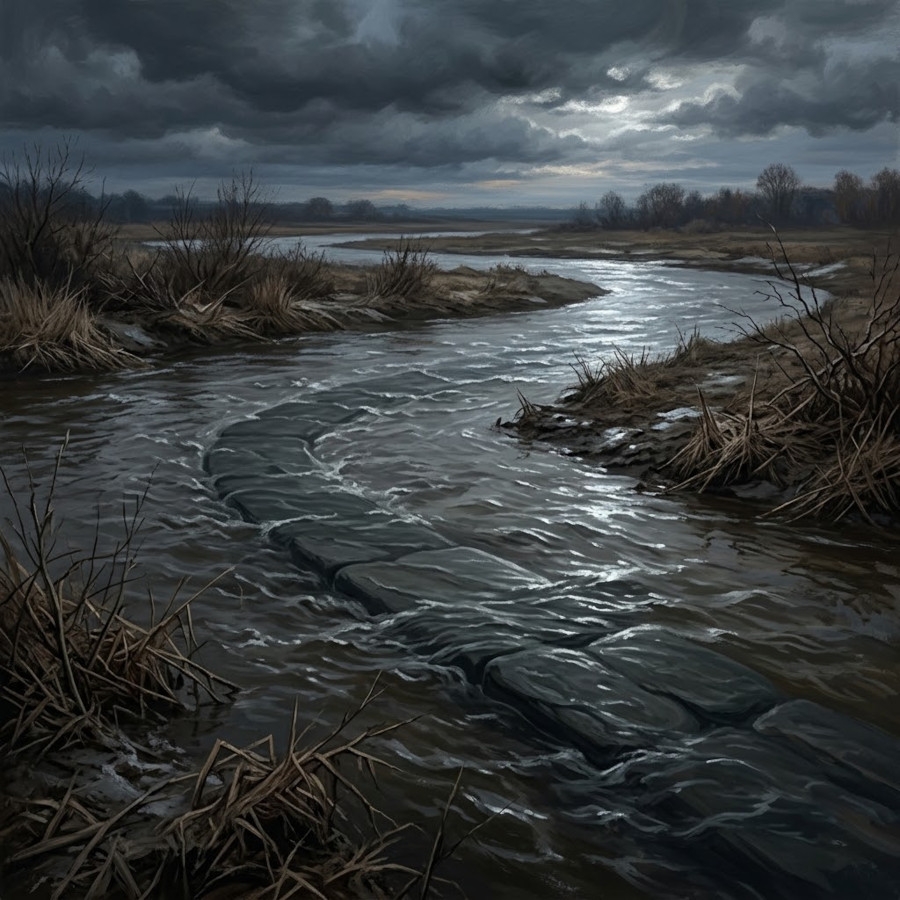
The creature’s petrified remains, as the Lipovans firmly believe, still lie submerged beneath the waves. In Lake Razim, between the shore crowned by the ruins of an ancient fortress and the islets of Popina and Popineț, runs an anomalous underwater track. The fishermen of Sarichioi call this smooth, unyielding strip the *shushava* (from the Romanian *șoseaua*—”highway”). At this crossing, the stone carapace underwater stretches as wide as a peasant homestead, making it entirely impossible to drive stakes into the ground to moor fishing nets (*matuny*). To the fishermen, this hardness carries a chillingly precise explanation: buried deep within the mire lies the serpent itself, and the sharpened poles simply glance off its impenetrable, fossilized hide.

To be continued…

ꏍꏍꏍꏍꏍꏍꏍ

To the traditional mind, the natural landscape is an open chronicle of primeval cataclysms. Man does not simply inhabit physical space—he navigates daily across the body of a shackled yet lingering chthonic evil, feeling the hardness of serpent scales beneath the keel of his boat and tracing the path of an ancient hunt in the fractures of the riverways.

🗺 Everyday geography often bears the indelible mark of myth. What strange hills, unexplained hollows, winding riverbeds, or “cursed” tracts of wasteland in your corner of the world does local lore still bind to the physical presence of unholy forces, primeval monsters, or sleeping giant warriors?

#ethnography #slavicfolklore #folklore #oldbelievers #legends
THE VAMPIRE IN SLAVIC TRADITION: Part 2/2

THE VAMPIRE IN SLAVIC TRADITION: Part 2/2

THE VAMPIRE IN SLAVIC TRADITION: Part 2/2

🧟‍♂ A Sack of Blood and the Vampirovići: Appearance and Habits

In our first post, we uncovered who was doomed to become a vampire. Now, let’s delve into what they actually looked like, what they did under the cover of night, and, most importantly, how to survive an encounter. A word of warning: the true appearance of the Slavic vampire might just spoil your appetite!

👀 Portrait of the Monster

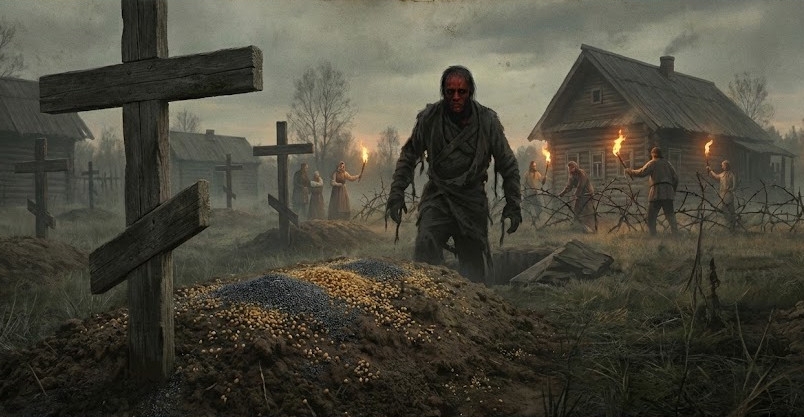
The Slavs believed that a vampire retained the likeness of the deceased person, wearing the very clothes in which they were buried. Yet the differences from the living were stark and chilling.

Vampiric traits across Slavic traditions included:

🔹 Gigantic stature, alongside a disproportionately massive head and teeth.

🔹 A tail.

🔹 A strange growth beneath the knee (believed to conceal the opening through which the soul escaped).

🔹 The absence of eyebrows, a nose, a spine, or even arms (in certain regional beliefs).

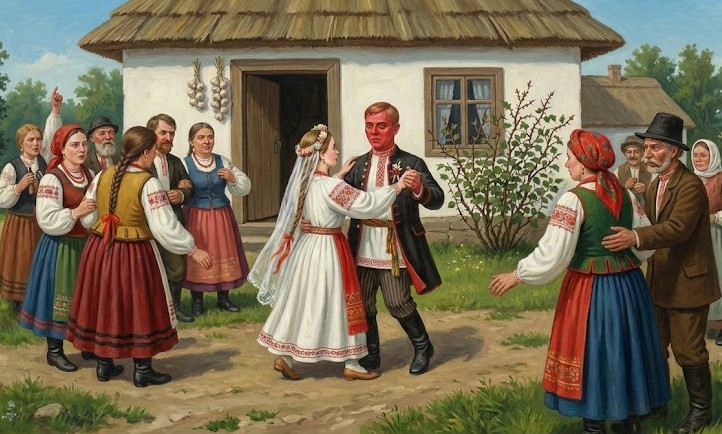
🔹 Complexion: Across virtually all Slavic lands, the vampire had a ruddy, blood-red face, often paired with crimson eyes.

The most horrific depiction belonged to the South Slavs: to them, the vampire was bloated like a sack. Completely boneless, its body was nothing more than a skin bag filled to the brim with blood. Free of a skeleton, it could squeeze through the narrowest cracks and keyholes.

🐾 Master of Disguise

For the first forty days following burial, the vampire was especially elusive. South Slavs believed it was either entirely invisible or wandered in the guise of a shadow or a sudden gust of wind.

Bulgarians and Serbs believed it could shapeshift into animals—not just any beast, but specifically the creature that had jumped over its corpse prior to burial! In this bestial form, it appeared before strangers; to its own kin, however, it showed itself in human likeness.

🌙 Night Habits and Family Ties

The vampire hunted exclusively by night, bound to return to its grave before the first cockcrow. Its prey were the most defenseless: infants, newlyweds, sleeping villagers, and, above all, its own family and former acquaintances. It would choke them in their sleep or drain their blood.

Yet its malice extended far beyond people:

🐎 Livestock: Bulgarians believed it ran horses and cows ragged all night, suckling blood from young calves and foals. Ukrainians believed the vampire (much like a witch) would “steal” milk from dairy cows.

🧶 The Homestead: Among the South Slavs, the vampire acted like a poltergeist—flinging household goods around, tangling threads on the loom, and overturning water jugs.

🧙‍♀ Dark Authority: In Ukrainian lore, the vampire was considered an elder over local witches, even carrying them on its back to their sabbaths.

Remarkably, Serbian and Bulgarian folk legends tell of vampires who, over time, managed to grow bones. Such a vampire could move to another village and even take a living woman as a wife! Children born of this unholy union—*vampirovići* (*вампировићи*)—might inherit the curse themselves, though Serbs believed they were born with a rare gift: the sight to spot and the strength to slay the undead.

Poles and Kashubians harbored a distinct terror of their own: their vampire could kill with voice alone, shouting victims’ names into the dark. Whoever heard the call and answered it dropped dead on the spot.

🛡 Arsenal of Defense: Poppy Seeds, Thorns, and Garlic

Our ancestors devised an entire system of defense.

Funerary Magic (East Slavs): To prevent the deceased from returning, the grave and the path from the house to the cemetery were strewn with poppy seeds or millet. Tradition held that a vampire was powerless to cross until it had counted and gathered every single grain.

Corpse Mutilation (South Slavs): A suspect corpse might be severed into pieces, the tendons behind the knees cut, or sharp iron objects driven into the heels. In Serbia and Bulgaria, fishing nets were draped over the body (so the spirit would get hopelessly tangled), or hearthstones and fireplace tools were laid upon the chest.

Warding the Home: If the vampire had already risen, remedies like garlic, tinder, and flint came into play. South Slavs cast a protective perimeter around the homestead with blackthorn branches, wedging thorny twigs into windows, doorframes, and even keyholes.

⚰ The Final Measure

Destroying a vampire called for brutal, absolute finality:

▶ Drive a stake through the corpse or straight into the grave mound (aspen or blackthorn worked best).

▶ Exhume the grave, sever the head, and place it face-down between the corpse’s legs—ensuring it could never find its body, let alone rise again.

ꏍꏍꏍꏍꏍꏍꏍ

👇 A question for you: As our ancestors believed, a vampire could be stopped dead in its tracks by scattering grain before it—compelling it to obsessively collect every seed. What modern compulsion do you think could stop a contemporary “vampire”? The uncontrollable urge to clear every unread notification on a phone? 😄

For further reading on this subject, see: *Slavic Antiquities: An Ethnolinguistic Dictionary*, edited by N. I. Tolstoy.

#slavicmythology #slavicfolklore

THE VAMPIRE IN SLAVIC TRADITION | Part 1/2

THE VAMPIRE IN SLAVIC TRADITION | Part 1/2

THE VAMPIRE IN SLAVIC TRADITION | Part 1/2

Hail to you, good folk! 👋

Today, let’s forget about pale-skinned Hollywood heartthrobs and talk about the monsters our ancestors truly feared. Brace yourselves—it’s going to be chilling, but endlessly fascinating!

🧛‍♂ Shadows of the Ancestors: Who is the Real Slavic Vampire?

Forget everything you’ve seen on the silver screen. A true Slavic vampire is no brooding aristocrat cloaked in velvet. This creature is far more ancient, primordial, and terrifying. In common Slavic folklore, a vampire (or *upyr*) is a corpse that rises from its grave by night. Its purpose is brutal and direct: it torments the living, ruins households, slaughters livestock, and, above all, gorges on blood.

Belief in these revenants reaches back into the mists of antiquity, rooted in the dread of those who refuse to remain truly dead.

🗺 A Geography of Fear and Names

Curiously, the further northeast you journey into the Slavic lands, the fainter these beliefs become. In the Balkans, however, vampire lore was an all-consuming reality. In fact, the very word we use today—“vampire”—traces its roots directly to Bulgaria and Serbia (where it was also known as a *grobnik*, a grave-dweller).

Yet nearly every land had its own name for this nocturnal stalker:

🇺🇦 Ukrainians spoke of the *upyr* (упир).

🇧🇾 Belarusians whispered of the *upor* (упор).

🇨🇿 Czechs feared the *upír*.

🇵🇱 Poles use the word *wampir*, but preserve a unique title for a female vampire: *opica*.

🇷🇺 Russians harbored a closely related archetype: the *zalozhny pokoynik*—the restless, “unclean” dead.

Make no mistake, this is no modern invention. Mentions of vampires appear in Old East Slavic manuscripts as early as the 14th century! These ancient records even recount *treby*—pagan sacrificial offerings—made directly to the *oupiri*.

👥 The High-Risk Circle: Who Becomes an Upyr?

Our ancestors were certain of one thing: nobody becomes a vampire by chance. It was the cursed fate of those whose life, death, or very birth crossed the sacred boundaries of tradition.

Here is the roster of prime “candidates”:

⯈ Suicides and murderers.

⯈ Those who perished from festering wounds or pestilence.

⯈ Sorcerers, misers, and chronic drunkards.

⯈ Anyone who suffered an unnatural, violent, or untimely death.

The liminal hours between physical death and burial were deemed extraordinarily hazardous. South Slavs believed a corpse could instantly turn into a vampire if the living made a single misstep:

🔸 If an object was passed or dropped across the body.

🔸 If raindrops touched the uncovered corpse.

🔸 If an animal leaped over or a bird flew across the deceased.

👶 Born into the Dark

At times, destiny was sealed at birth. In the Carpathian Mountains, folk cast wary eyes on a fifth or seventh son born without an unbroken succession of sisters, as well as anyone suspected of possessing two hearts or two souls—the dreaded *dvoedushniki*.

South Slavic traditions held their own grim omens: a child was doomed to turn if their mother, while carrying them, ate meat from an animal torn by a wolf—or if the child was sired by a vampire itself.

Crucially, it was believed that vampires were predominantly male. Women turned far less frequently. According to Macedonian lore, such a fate awaited only those who had lived as enchantresses, cunning women (*znakharki*), or who had died in the agony of childbirth.

🌘 Living Vampires and the Two-Souled

Most terrifying of all: a vampire was not always a rotting corpse. In Ukraine, Poland, and eastern Serbia, folk lived alongside *living vampires*. These were sorcerers and *dvoedushniki* (the two-souled). While their mortal shell lay asleep, their second soul could slip out into the night to bring ruin upon their neighbors. In the Kharkiv region, legends claimed a living vampire could hide his soul beneath a stone—and so long as it lay untouched, he could never truly die!

How could you unmask a living vampire?

❄ Cold to the touch: Macedonians believed their bodies turned ice-cold after nightfall.

🌑 Casts no shadow: South Slavs held that a living vampire walked without a shadow.

😡 A flushed face: Their complexion was perpetually ruddy and engorged with stolen blood. A Kashubian proverb warns: *“Cervoni jak v́ešči”* (“Red as a vampire”). This flush clung to them even in death.

🐑 The butcher’s trade: If a living vampire worked as a butcher, the livestock he slaughtered miraculously bled not a single drop.

In Western Ukraine, village folk knew a cunning trick to incapacitate a sleeping *upyr*: they would flip his body around so his feet rested where his head had been. It was believed that the wandering soul, upon returning, would fail to recognize the body’s orientation, lose its way, and leave the monster trapped in eternal sleep.

ꏍꏍꏍꏍꏍꏍꏍ

👇 As lore tells us, a living vampire could be unmasked by an absent shadow or an unnervingly blood-red face. Have you ever crossed paths with someone whose aura, looks, or habits were so unsettling that our ancestors would have branded them a *dvoedushnik* without a second thought?

For deeper research, consult: *Slavic Antiquities: An Ethnolinguistic Dictionary*, edited by N. I. Tolstoy.

#slavicmythology #folklore #slavicfolklore

The Wedding Path: Magic in Motion and the Pea Hex (Part 3)

The Wedding Path: Magic in Motion and the Pea Hex (Part 3)

🔥 The Wedding Path: Magic in Motion and the Pea Hex (Part 3)

Traversing alien territory demanded more than just ritual offerings; it required magical camouflage. The traditional wedding train (*poezd*) was, in essence, a raiding party cutting its way through hostile lands under the shield of rigid behavioral taboos and protective speed.

🤐 Resolute Silence

To avoid drawing the attention of unseen threats and ward off the evil eye, the bride and groom often retreated into ritual muteness. In the Russian North and among Bulgarians, the newlyweds maintained unbroken silence on their journey to the church. Among the Slovaks of the Upper Hron region, the entire trek unfolded without a single song, draped in a heavy, anxious quiet. A Serbian bride went further still: she not only kept silent, but kept her face completely veiled, forbidden to dismount or even let her feet touch the earth—suspended in total isolation, like a creature walking between worlds.

🐎 Breakneck Gallop

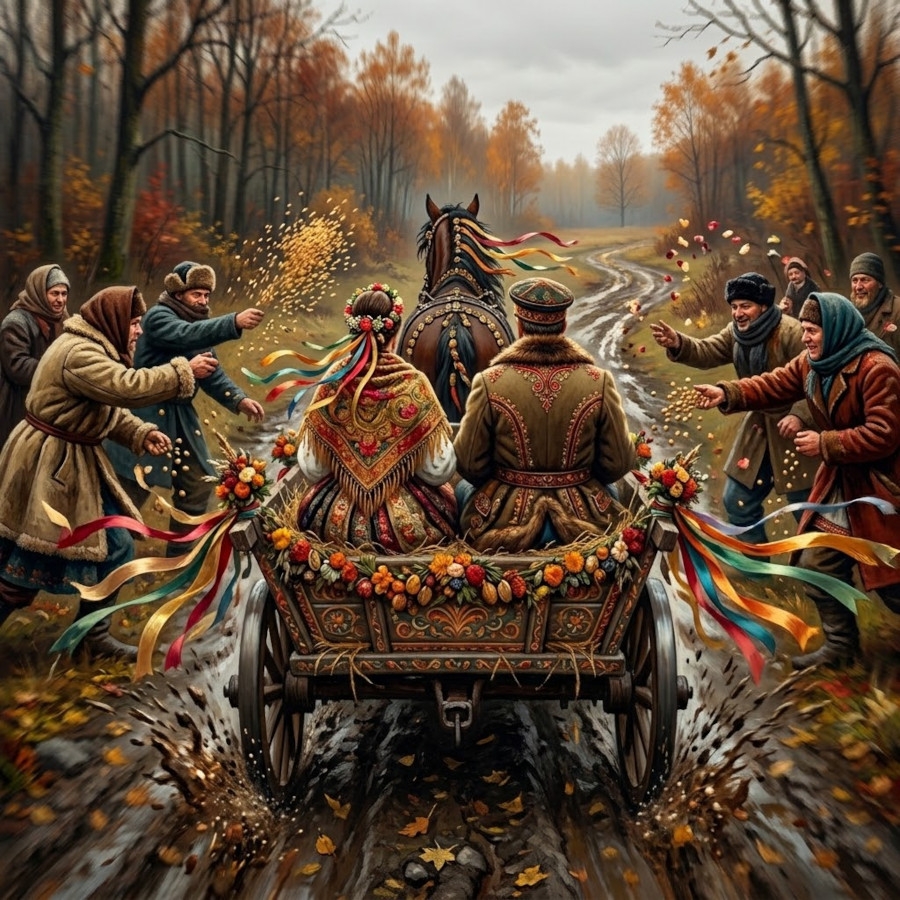
When concealment failed, speed became the only shield. A wedding cortege from Vologda rode with reckless bravado (*molodchestvo*): charging at full tilt, daringly holding course, never yielding the road to anyone. In the Polesia region of Belarus and among the Lusatian Sorbs, processions raced toward the church at blistering speeds, while in Vyatka Governorate, drivers rode with one leg defiantly swung over the side of the wagon. In Montenegro, the mounted escorts might ignore roads altogether, cutting a straight line to the groom’s homestead right across private fields. Speed was a weapon to outrun time and slip through sorcery, giving dark forces no handhold on the passing train.

🕷 Nine Peas and Bear Grease

Well aware of how vulnerable a moving escort was, black sorcerers (or rival cunning folk hired by ill-wishers) struck mid-stride, aiming to freeze the horses dead in their tracks. Among Russians and Belarusians, the most dread weapon was an ordinary pea pod: in Vologda Governorate, a sorcerer would cast a pod containing nine peas onto the road while whispering an incantation, causing the horses to halt petrified or miraculously slip their harnesses. In Vitebsk Governorate, a team would refuse to move if a bound flea was placed on the road before them, while in Pskov, the flea was sealed inside a hollow straw. In northern Belozerye, a matchbox holding a cockroach was thrown in their path—which the horses, through witchcraft, perceived as a towering bear. Along the Kama River, aspen stakes smeared with bear grease were driven into the roadside. Once brought to a standstill by such magic, the horses could only be reharnessed by bare hands holding a wisp of hay; failing to do so doomed the couple to a bitter life together.

ꏍꏍꏍꏍꏍꏍꏍ

The bridal journey truly ended only when the procession broke into its own domesticated space—the familiar locus. In Ukraine, the newlyweds were driven through a purifying fire of burning straw lit right in the gates of the groom’s courtyard. The wild gallop, ritual muteness, and simulated deaf-and-blindness were ancient methods of shielding oneself from an untamed world—a desperate bid to slip unseen through the liminal boundary where mortals stood utterly defenseless before curses, hexes, and foreign malice.

🔥 Today, our motorcades no longer thunder blindly down dirt roads or dodge dung carts. Yet the tradition of tying cans to bumpers, blaring car horns, and speeding down the avenue survives. What do you think: beyond pure revelry, what elements of modern wedding processions still subconsciously echo that ancient impulse to “scatter unclean spirits” and fiercely guard the perimeter?

For further reading on this subject: A. V. Gura, *The Ritual Path in the Slavic Wedding Rite*

#folklore #ethnography #slavicmythology #weddingrites #incantations

The Wedding Journey: The River Threshold and Another’s Destiny (Part 2)

The Wedding Journey: The River Threshold and Another’s Destiny (Part 2)

🌊 The Wedding Journey: The River Threshold and Another’s Destiny (Part 2)

Having broken through the gates of the homestead, the wedding train enters open territory—a realm where space no longer belongs to mankind. Forests, rivers, and crossroads are perilous liminal zones, each demanding a sacrificial tribute or an intricate protective ritual.

💧 Dark Waters and the Halting of Time

A river marks one of the primary thresholds along the path. At this juncture, the bride is duty-bound to leave a ransom. Bosnians offer an article of clothing to the water, while Latgalian Russians cast a woven belt into the current. A Serbian bride washes her face and tosses a coin from the bridge, sealing this sympathetic somatic magic with an incantation: *“Pređoh vodu, ne ugazih, rodih dete, ne osetih”* (“I crossed the water without getting wet; I bore a child without feeling pain”). The Poles of the Chełm Voivodeship dread that a *vodyanoy* (water spirit) might snatch the bride from the surface, or that one of the newlyweds will soon perish. Meanwhile, Belarusians of the Grodno Governorate, when passing a watermill, demand that the flow and the mill wheel be stopped completely—lest the bride’s entire life spin endlessly like a wheel in turmoil.

🕸 Dancing at the Crossroads

Crossroads are another dangerous realm along the ritual journey, places where the unclean force gathers in strength. Croats of Central Dalmatia make the sign of the cross at every fork in the road, knowing that it is precisely here that the *veštice* (witches) dance their circle dances. Among the Russians of the Middle Volga, the bride casts an onion onto the crossroads, ritually and permanently abandoning her pre-nuptial tears in this “unclean” place.

⚔ A Collision of Fates

The worst calamity that can occur within alien space is a fatal encounter. Crossing paths with a cart of manure is considered an ill omen by Slovaks, while meeting a funeral procession forebodes certain death for one of the newlyweds (among the Sorbs and the Poles of Western Galicia) or for their future firstborn (in the Vitebsk Governorate).

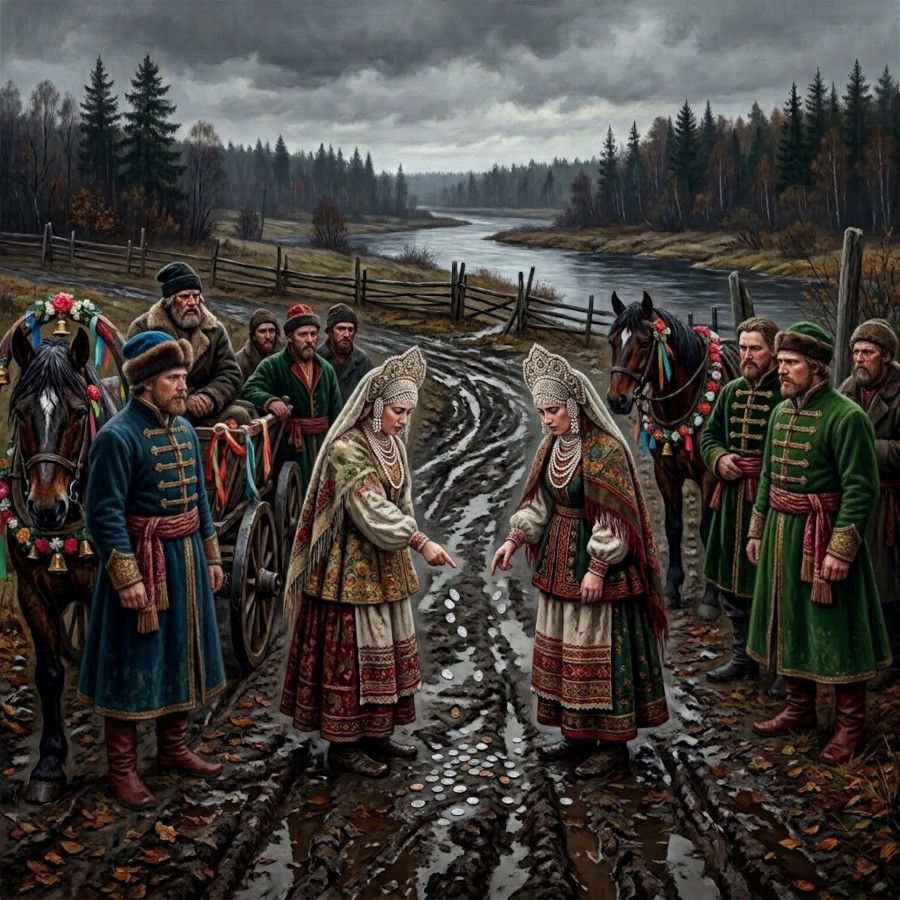
Yet the most dread and mystical peril is meeting another wedding train. The South Slavs and the Belarusians of Polesia believe that when two brides cross paths, one will inevitably strip the other of her *dolya* (allotted destiny) and lifespan. To prevent this spiritual hijacking of fate, Montenegrins abruptly turn the brides’ faces away from one another, while Kosovo Serbs cover them entirely. Bulgarians compel the young women to exchange iron pins, sugar, or coins that have first been laid upon the bare earth. In Rivne Polesia, both processions are required to halt, and the couples must kiss and bless one another to untie the lethal knot of their crossed paths.

To be continued…

ꏍꏍꏍꏍꏍꏍꏍ

In the logic of traditional myth, the road is never merely a backdrop for travel. It is a living, aggressive element that demands payment for every yard traversed. The wedding train operates like a heavily armed diplomatic mission: bribing dark waters with silver, shedding tears at the crossroads, and bargaining with surrounding spirits for the right to live. Man does not command this space—he merely treads its razor’s edge with exacting precision.

🗝 Even today, modern wedding motorcades blare their horns at intersections and bridges, as though attempting to drive off an unseen threat with aggressive noise. What other seemingly inexplicable road traditions, peculiar routes, or vehicle decorations have you noticed at weddings in your region, and how do you interpret this ancient need to “shield” the journey?

#folklore #ethnography #slavictraditions #weddingritual #folkbeliefs