Chronicles of Living Time: Washed-Away Days and the Subterranean Easter (Part 2)

Chronicles of Living Time: Washed-Away Days and the Subterranean Easter (Part 2)

🌊 Chronicles of Living Time: Washed-Away Days and the Subterranean Easter (Part 2)

To the archaic mind, time is a fragile substance. For chronology to exist at all, it demands a physical anchor, a tally mark, a tangible trace. Erase these material markers, and time itself unravels, tumbling into a chthonic void.

⏳ The Washed-Away Calendar

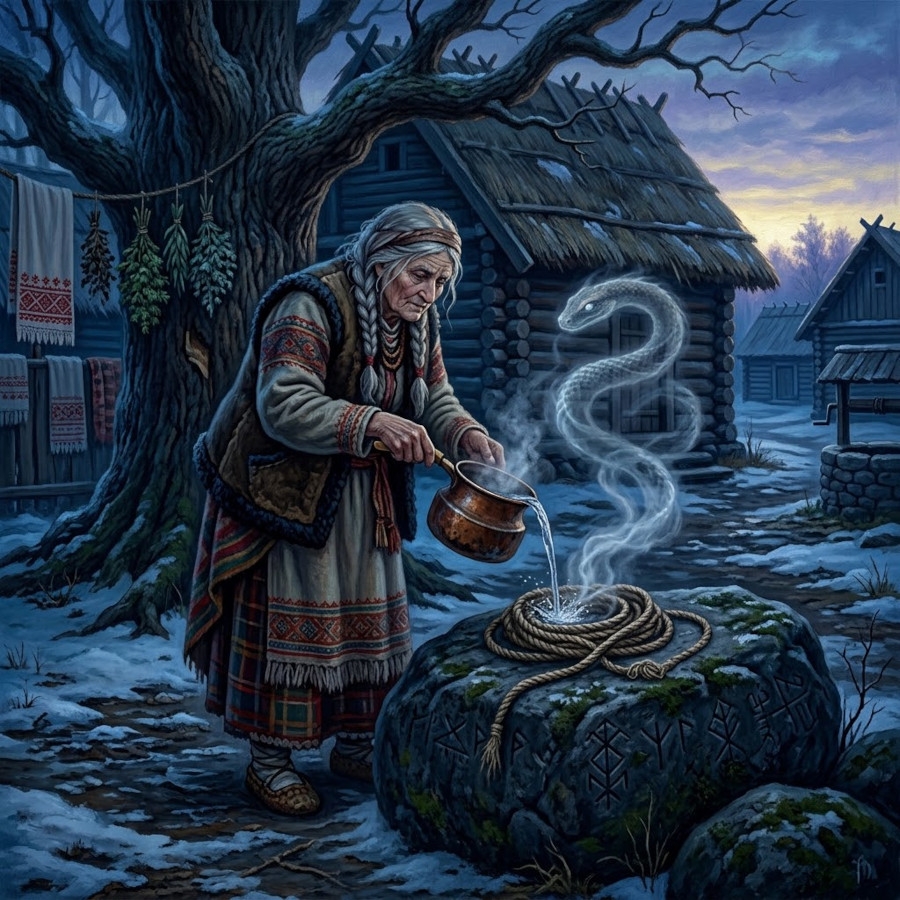
In Podillia, an ancient legend tells of early tribes who had no written word and reckoned the passage of days by drawing notches in the riverside sand. This physical calendar worked well enough—until a tempest struck. The river burst its banks, sweeping the temporal marks forever into the depths. Folk etymology attributes the origin of the Dniester River’s name (*Dnister*) to this very chronological catastrophe: it is the water that “wiped away the days” (*dni ster*).

🥚 Signals Through the Water

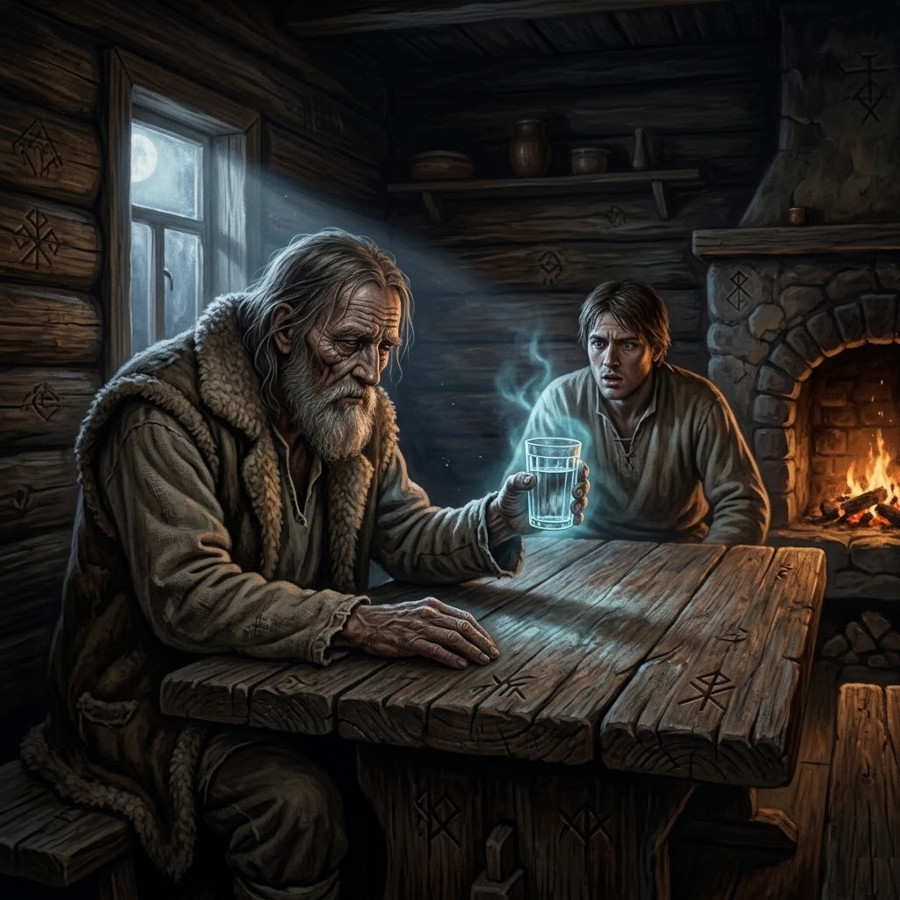
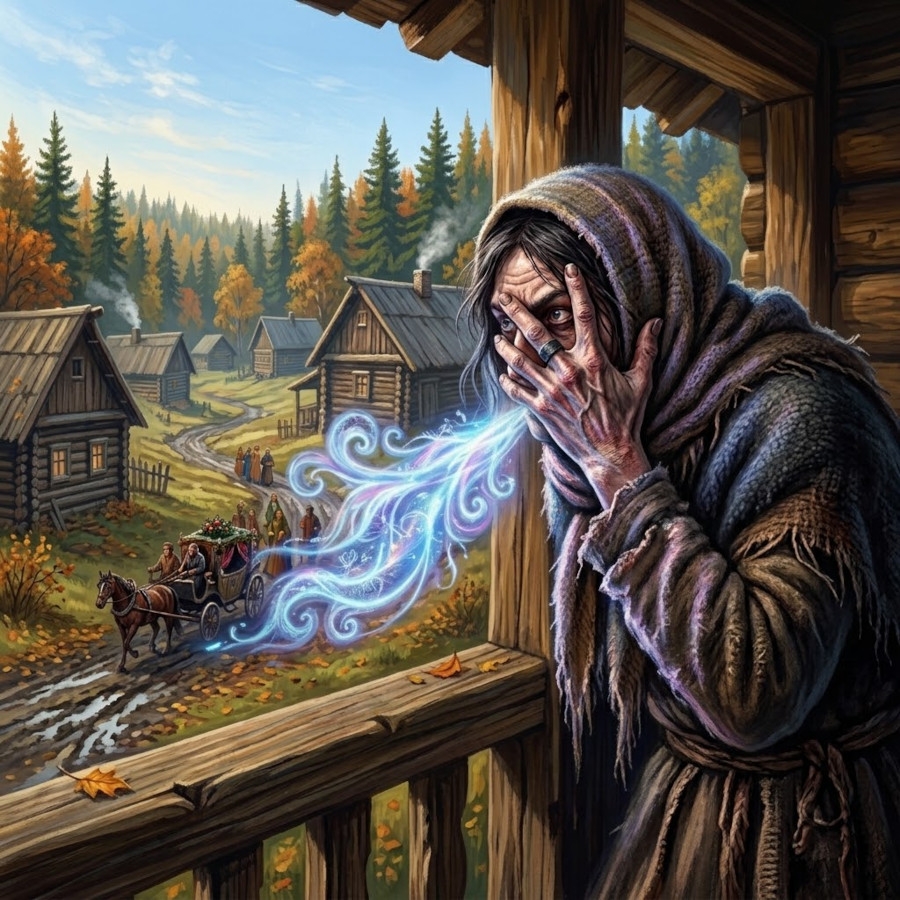
Because time is physical, its flow is broadcast through the elements like a radio signal. In southwestern Ukraine, folklore tells of the *Rakhivany* or *Rakhman* people—a blessed race dwelling deep beneath the earth, beside the great primeval waters into which all the world’s rivers converge. They fast year-round, severed from the solar calendar and blind to the coming of holy days. They learn of Rakhman Easter (*Rakhman Velykden*) only when the river arteries carry down the shells of consecrated eggs, cast into the water by the living on Holy Saturday.

🔔 Tolling from Below

The connection runs both ways. The physical contact between the two worlds is closed through the mantle of the spring earth. On Rakhman Easter, the righteous can hear a low, solemn tolling of bells rising from the underworld if they press an ear firmly against the damp soil. Sacred time flows from realm to realm, using water as its conductor and the earth as its membrane.

ꏍꏍꏍꏍꏍꏍꏍ

In the traditional worldview, sacred time is no intangible stream, but a heavy, palpable substance. It is etched into shoreline sand, washed away by storm swells, and floated downriver in the form of eggshells. Man here is not the master of the calendar, but a grim signalman stationed at the threshold between two worlds, listening intently to the rumbling hum of the spring earth so as not to miss the turning of the new cycle.

🌊 The sense that the crucial moments of our lives are bound by invisible threads to the cycles of nature lives within us to this day. How do you explain this inescapable pull to align our personal or family rhythms with natural phenomena (the first snowfall, the ice run, the spring bloom)? What omens or folk signs in your family are held as the unmistakable physical cue that “the time has come”?

For further reading: O. V. Belova, *Tales of Lost Time*

#folklore #ethnography #slavictraditions #folkcalendar #legends

Chronicles of Living Time: The Calendar in the Mind and the Humbling of the Wise (Part 1)

Chronicles of Living Time: The Calendar in the Mind and the Humbling of the Wise (Part 1)

🕰 Chronicles of Living Time: The Calendar in the Mind and the Humbling of the Wise (Part 1)

In the traditional Slavic worldview, time is no abstract grid of numerals printed on paper, but a dense, tangible substance suffusing the natural world. To the peasant, an official, city-printed calendar is a lifeless contrivance, severed from the breathing earth.

🧠 The Internal Chronometer

The Hutsuls, bound inextricably to the natural rhythms of the Carpathians, rely solely on an inner compass. They prefer to consult “their own household calendar kept in the head” (*svoyim domashnym kalendarem yz holovy*). The ancestral folk order is unyielding: survival lore forged across centuries never fails to signal the arrival of sacred feast days (*s’yetky*) or an impending shift in the weather. City-made calendars, by contrast, are dismissed as deceitful scraps of paper unworthy of trust.

📜 The Collapse of Bookish Learning

This stark clash of worldviews is captured vividly in a Carpathian folktale about urban scholars—the *mudrahelyky*, or self-styled wiseacres. A physician (*dokhtor*), a clockmaker (*hodynnykar*), and an astrologer (*zvizdar*), who place their blind faith in books and clockwork, suffer a crushing defeat when caught in a village downpour. They fail to foresee the storm, lose all sense of time without dials, and have no notion of how to heal an ailment without apothecary drafts.

🐂 The Living Physics of Everyday Life

The peasant’s answer to these humbled sages reveals an authentic, fail-safe technology of living. Paper learning proves utterly powerless where time and weather can be read directly from the fleece of livestock and the turn of the wind. For the villager, a scorching clay stove is the sovereign healer, his own peasant constitution (*khlopska natura*) serves as an immaculate timepiece, and his livestock (*marzhyna*) functions as an absolute, unerring calendar of nature.

To be continued…

ꏍꏍꏍꏍꏍꏍꏍ

Abstract time, locked within typographic tables, has no flesh. Tradition teaches that the true chronometer pulses in the blood, creaks in the floorboards, and breathes in the barn. Surrendering entirely to the printed word and mechanical contrivances breeds blindness; yet one who is woven into the living fabric of nature reads time like an open book, needing none of civilization’s fragile crutches.

🕰 Urban life has long severed us from the ability to feel time without clock dials and phone forecasts. Can you recall a time when your elders (or you yourself) unerringly predicted a change in the weather, the exact hour of the day, or the season’s harvest purely by instinct, the behavior of animals, or subtle natural signs? How was that uncanny insight explained in your family?

#folklore #ethnography #slavictraditions #hutsuls #folkcalendar

[Translation Notes]

Carpathian dialect terms (*mudrahelyky*, *s’yetky*, *marzhyna*) were preserved in transliteration alongside precise contextual equivalents to maintain authentic ethnographic color without stalling narrative flow for fantasy or graphic-novel readership.

Chronobiology of the Wedding: Forty Days of Impurity and the Bearskin (Part 3)

Chronobiology of the Wedding: Forty Days of Impurity and the Bearskin (Part 3)

🐻 Chronobiology of the Wedding: Forty Days of Impurity and the Bearskin (Part 3)

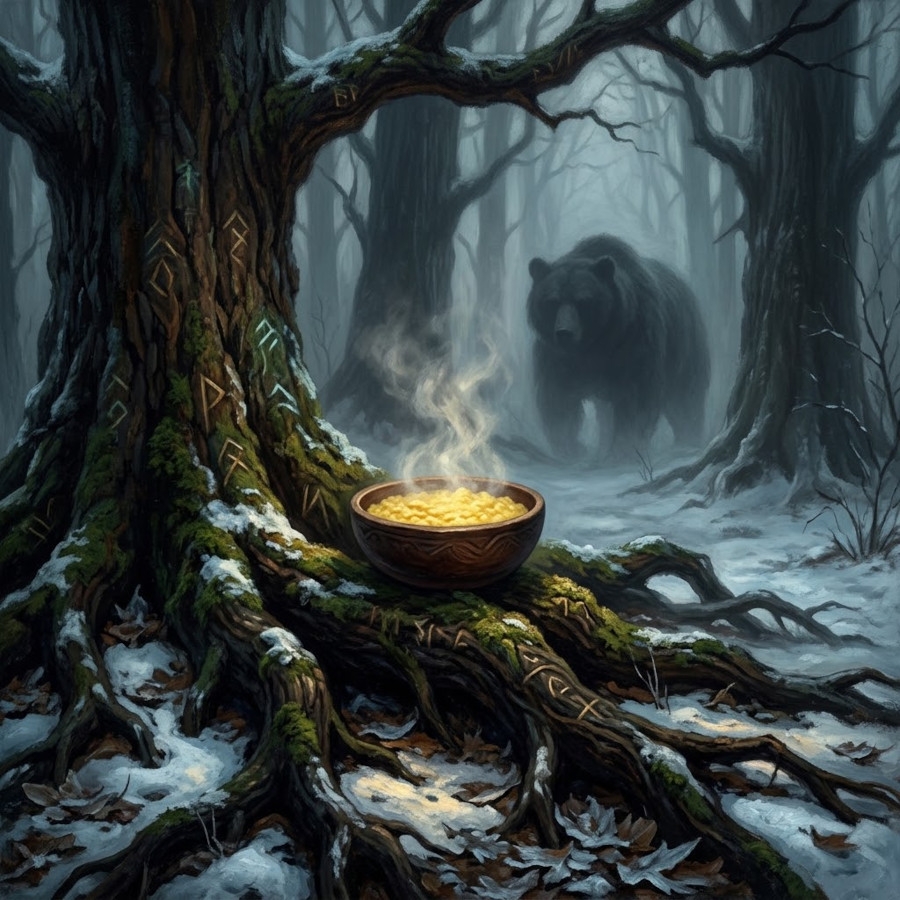
In traditional wedding ritualism, the bride acts as the Ground Zero of a chronological anomaly. Crossing the threshold of the groom’s home, she breaches a spatial boundary, only to hang suspended for forty long days in the void of untraversed time. During this liminal period, she carries a terrifying dual nature: as a conduit of fertility she is profoundly potent (in western Bulgaria, she is even disguised as a she-bear and made to dance a ritual dance), yet as an outsider arriving from the unknown, she poses a lethal danger to the living.

🌑 Fear of Sunset and Mirrors

Her isolation begins at the betrothal. The maiden is strictly forbidden from looking into a mirror until the wedding night. She is completely stripped of the right to interact with the outside world after dark: she cannot step outside past dusk (*слънцето да не я залязва навън* — “lest the sun set upon her out of doors”).

🚫 The White Wool Quarantine

Following the church crowning, a forty-day—and at times year-long—quarantine begins. The *molodukha* (newly wedded woman) is deemed ritually “unclean.” Her bridal veil remains untouched for as long as possible, shielding this vulnerable soul from being struck down by *lekhusi* demons. A heavy shroud of taboos falls over her: she is forbidden from walking barefoot, bareheaded, or without outerwear—near Edirne (Odrin), she wears a long, sleeveless white wool coat (*byala gunka*) for an entire year. She must not draw near the well, lest its waters become infested with worms, and she is categorically barred from attending funerals.

🗝 Emerging from the Void

The lifting of the quarantine and the exit from this temporal void follow an unbending schedule. On the fortieth day, a prayer of purification is recited and ritual breads are distributed. Yet the final removal of all prohibitions—the ceremonial “undressing” (*sablichane*) and “unshoeing” (*sabuvane*)—is observed only at major crossroads of the folk calendar: Saint George’s Day (Yuryev Day), Ascension Day (*Spasovden*), or Winter Saint John’s Day (Ivanovden).

ꏍꏍꏍꏍꏍꏍꏍ

In the traditional worldview, crossing from one social status into another is never an instantaneous flash of celebration, but a slow, agonizing smelting of one state of being into another. During these forty days, the young bride behaves like a radioactive isotope of transition: she is insulated behind dense wool and unyielding taboos so that her threshold state does not poison the vital space of the community—and so the mundane world does not crush her unseen, nascent flesh.

🐻 Today, these ancient quarantines are long forgotten, yet the instinct endures. In which modern wedding or post-wedding customs do you still recognize that primal urge to conceal, shield, or isolate newlyweds from outside eyes?

For further reading: E. S. Uzeneva, *Time in the Bulgarian Wedding*

#folklore #ethnography #slavictraditions #bulgarians #wedding

[Localization Notes]

*Lekhusi* refers to dangerous Balkan demonological spirits (from the Greek *lechona*, woman in childbed) traditionally believed to torment and kill women suspended in liminal reproductive states (postpartum mothers and new brides). The Bulgarian terms (*byala gunka*, *sablichane*, *sabuvane*) have been transliterated according to standard Bulgarian romanization rules with functional ethnographic glosses.

The Mycelium of Magic: What Connects a Croatian Demon to a Carpathian Dragon?

The Mycelium of Magic: What Connects a Croatian Demon to a Carpathian Dragon?

🕸 The Mycelium of Magic: What Connects a Croatian Demon to a Carpathian Dragon?

In previous posts, we explored the eerie demonology and protective wards of the Burgenland Croats. But the most striking truth about their culture is that they never forged these rituals in isolation. Ethnolinguists refer to such places as “island enclaves” or living time capsules. Peering into them reveals the invisible threads that once wove all of ancient Europe into a single mystical tapestry.

🐉 The Carpathian Trail: Serpent Riders

Remember that chilling storm-conjuring youth—the *garaboncijaš*? The Croats of Hungary inherited this figure from beyond their borders. It is a direct echo of grim Carpathian and Romanian legends telling of formidable sorcerers who subdue dragons with an enchanted bridle and take to the skies, wielding the weather like a weapon and casting ruinous hailstorms over their enemies’ fields.

🌱 The West Slavs: Sowing the Yuletide Crumbs

In our last discussion, we mentioned wild blooms springing from consecrated Easter crumbs. Yet this ritual was far from unique to the Croats. Further north, among the Western Slavs of Bohemia and the Slovak region of Gemer, peasants did the exact same thing—only using crumbs swept from the Christmas Eve feast. They believed that come spring, healing tansy or chamomile would take root in their soil. In the Croatian region of Međimurje, this sacred plant even retained its folk name: *koledno droptinje*—literally, “Christmas crumbs.”

🕯 The Slovenian Borderlands: Headless Phantoms

Close proximity to the Slovenes left an equally vivid mark. In Prekmurje—just as among the Burgenland Croat communities of southern Hungary—people lived in dread of will-o’-the-wisps. To them, these were no mere marsh lights, but gruesome, headless specters bearing a burning candle where their skull should be. Local lore claimed they were the damned souls of fraudulent land surveyors who spent their mortal lives cheating neighbors out of their rightful boundaries.

🌑 Echoes of the Homeland

Night demons such as the suffocating *mrak* were not born in exile; the Croats carried these memories with them through generations of migration. Tales of this sinister entity preying upon newborn babes in the dark can still be heard in their ancestral lands: across the Istrian peninsula and the highlands of Lika.

ꏍꏍꏍꏍꏍꏍꏍ

Academician Nikita Tolstoy once mapped out distinct “archaic zones” across Europe—sanctuaries where folk traditions remained untouched in their purest forms. Among them were the deeply archaic Polesia, the Russian North, western Bulgaria, central and northeastern Serbia, and Polish Kashubia. The enclaves of the Burgenland Croats belong in that very pantheon.

Folk culture is like a shattered clay vessel: unearth a shard bearing a warding spell in an Austrian village, and you will find it fits seamlessly into a Slovak ritual and a Romanian demon. Our world once shared a single, unified magical tongue.

👇 Have you ever noticed how your own grandmother’s eerie village tales, omens, or superstitions—whispers of the *leshy*, the evil eye, or the hearth-dwelling *domovoy*—suddenly echo the lore of cultures thousands of miles away? Have you ever felt the pull of this subterranean “mycelium” of folk mysticism that renders borders meaningless?

Further reading: A. A. Plotnikova, *Burgenland Croats of Austria, Hungary, and Slovakia: An Ethnolinguistic Study*.

#SlavicMythology #FolkBeliefs #SlavicFolklore #Ethnography #BurgenlandCroats #MythologyAndFolklore #TraditionalLore #PaganEchoes

[Localization Notes]

* “Градищанские хорваты” is rendered as “Burgenland Croats” (from *Burgenland* / *Gradišće*), the standardized English historical and ethnological term for this diaspora group.

* *Garaboncijaš* corresponds to the Hungarian *garabonciás* and Romanian *solomonar*, mythic wandering scholars and storm-callers; preserving the Croatian spelling retains local color while the context clarifies their nature as dragon-riding weather-sorcerers.

* *Koledno droptinje* relies on *koleda* (winter solstice / Christmas folk caroling cycles); translating its literal sense as “Christmas crumbs” ensures clarity while maintaining ethnographic authenticity.

New comics episode is going to be released soon!

New comics episode is going to be released soon! Don’t want to miss the premiere?! Send us email to slava@slovene.online with a word “SLOVJANE” in the subject field and do not forget to tell us what COUNTRY are you from. We will include you in the distribution list and send you an exclusive gift – e-wallpaper “LESHY” for your PC, tablet and phone!