
THE VAMPIRE IN SLAVIC TRADITION: Part 2/2
🧟♂ A Sack of Blood and the Vampirovići: Appearance and Habits
In our first post, we uncovered who was doomed to become a vampire. Now, let’s delve into what they actually looked like, what they did under the cover of night, and, most importantly, how to survive an encounter. A word of warning: the true appearance of the Slavic vampire might just spoil your appetite!
👀 Portrait of the Monster
The Slavs believed that a vampire retained the likeness of the deceased person, wearing the very clothes in which they were buried. Yet the differences from the living were stark and chilling.
Vampiric traits across Slavic traditions included:
🔹 Gigantic stature, alongside a disproportionately massive head and teeth.
🔹 A tail.
🔹 A strange growth beneath the knee (believed to conceal the opening through which the soul escaped).
🔹 The absence of eyebrows, a nose, a spine, or even arms (in certain regional beliefs).
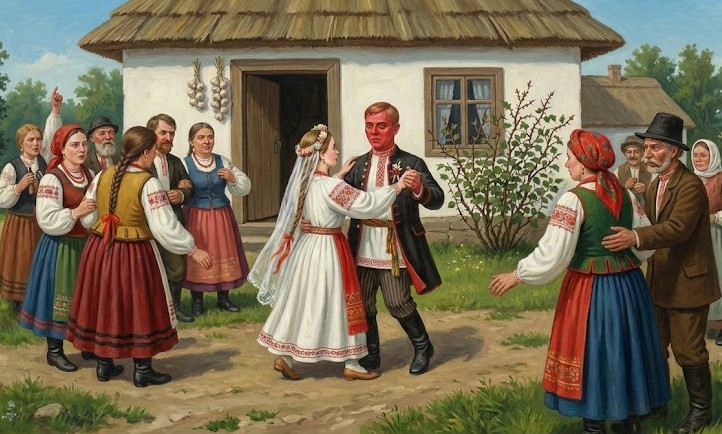
🔹 Complexion: Across virtually all Slavic lands, the vampire had a ruddy, blood-red face, often paired with crimson eyes.
The most horrific depiction belonged to the South Slavs: to them, the vampire was bloated like a sack. Completely boneless, its body was nothing more than a skin bag filled to the brim with blood. Free of a skeleton, it could squeeze through the narrowest cracks and keyholes.
🐾 Master of Disguise
For the first forty days following burial, the vampire was especially elusive. South Slavs believed it was either entirely invisible or wandered in the guise of a shadow or a sudden gust of wind.
Bulgarians and Serbs believed it could shapeshift into animals—not just any beast, but specifically the creature that had jumped over its corpse prior to burial! In this bestial form, it appeared before strangers; to its own kin, however, it showed itself in human likeness.
🌙 Night Habits and Family Ties
The vampire hunted exclusively by night, bound to return to its grave before the first cockcrow. Its prey were the most defenseless: infants, newlyweds, sleeping villagers, and, above all, its own family and former acquaintances. It would choke them in their sleep or drain their blood.
Yet its malice extended far beyond people:
🐎 Livestock: Bulgarians believed it ran horses and cows ragged all night, suckling blood from young calves and foals. Ukrainians believed the vampire (much like a witch) would “steal” milk from dairy cows.
🧶 The Homestead: Among the South Slavs, the vampire acted like a poltergeist—flinging household goods around, tangling threads on the loom, and overturning water jugs.
🧙♀ Dark Authority: In Ukrainian lore, the vampire was considered an elder over local witches, even carrying them on its back to their sabbaths.
Remarkably, Serbian and Bulgarian folk legends tell of vampires who, over time, managed to grow bones. Such a vampire could move to another village and even take a living woman as a wife! Children born of this unholy union—*vampirovići* (*вампировићи*)—might inherit the curse themselves, though Serbs believed they were born with a rare gift: the sight to spot and the strength to slay the undead.
Poles and Kashubians harbored a distinct terror of their own: their vampire could kill with voice alone, shouting victims’ names into the dark. Whoever heard the call and answered it dropped dead on the spot.
🛡 Arsenal of Defense: Poppy Seeds, Thorns, and Garlic
Our ancestors devised an entire system of defense.
Funerary Magic (East Slavs): To prevent the deceased from returning, the grave and the path from the house to the cemetery were strewn with poppy seeds or millet. Tradition held that a vampire was powerless to cross until it had counted and gathered every single grain.
Corpse Mutilation (South Slavs): A suspect corpse might be severed into pieces, the tendons behind the knees cut, or sharp iron objects driven into the heels. In Serbia and Bulgaria, fishing nets were draped over the body (so the spirit would get hopelessly tangled), or hearthstones and fireplace tools were laid upon the chest.
Warding the Home: If the vampire had already risen, remedies like garlic, tinder, and flint came into play. South Slavs cast a protective perimeter around the homestead with blackthorn branches, wedging thorny twigs into windows, doorframes, and even keyholes.
⚰ The Final Measure
Destroying a vampire called for brutal, absolute finality:
▶ Drive a stake through the corpse or straight into the grave mound (aspen or blackthorn worked best).
▶ Exhume the grave, sever the head, and place it face-down between the corpse’s legs—ensuring it could never find its body, let alone rise again.
ꏍꏍꏍꏍꏍꏍꏍ
👇 A question for you: As our ancestors believed, a vampire could be stopped dead in its tracks by scattering grain before it—compelling it to obsessively collect every seed. What modern compulsion do you think could stop a contemporary “vampire”? The uncontrollable urge to clear every unread notification on a phone? 😄
For further reading on this subject, see: *Slavic Antiquities: An Ethnolinguistic Dictionary*, edited by N. I. Tolstoy.
#slavicmythology #slavicfolklore