
PDF version of our graphic novel about customs and beliefs of the Slavic people in the early Middle Ages is available for FREE download here: https://www.slovene.online/boar
ꏍ
Horseshoe in Slavic rituals
Bulgarians in Thrace, during the “wolf days”, used to toss horseshoe into the fire so that the “wolf’s mouth would burn”. Housewives in Poland and Western Belarus used to heat a horseshoe on fire until it was red-hot, and then poured milk from a “spoiled” cow on it. Or they could throw the red-hot horseshoe into a milk pan in order to return the milk “stolen” by the witch to the cow and to punish that witch. They believed that the witch would come running to this house and try to steal something – if she did not succeed, she would die. In the Carpathian region of Ukraine, people believed that in order to free a witch from the power of evil spirits, one should nail a horseshoe to her bare foot.
ꏍ
Among the Bosnian Muslims, women, to cure infertility, girded themselves with an iron hoop, which was forged by a blacksmith at midnight from the horseshoe of a dead horse.
ꏍ
Sometimes, a horseshoe was used as a sacrifice. In Bulgaria, if a person got sick in some area, a horseshoe was left to the mythological owner of this place to “shoe his horse”. And in Serbia, a horseshoe and a nail were presented as a gift to the mythological creature Vileniak (half-human and half-vila with special powers over nature).
ꏍ
What other rituals with a horseshoe do you know?
ꏍ
More interesting facts can be found in: “Slavic Antiquities” encyclopedia by Institute for Slavic Studies of the Russian Academy of Sciences.
ꏍ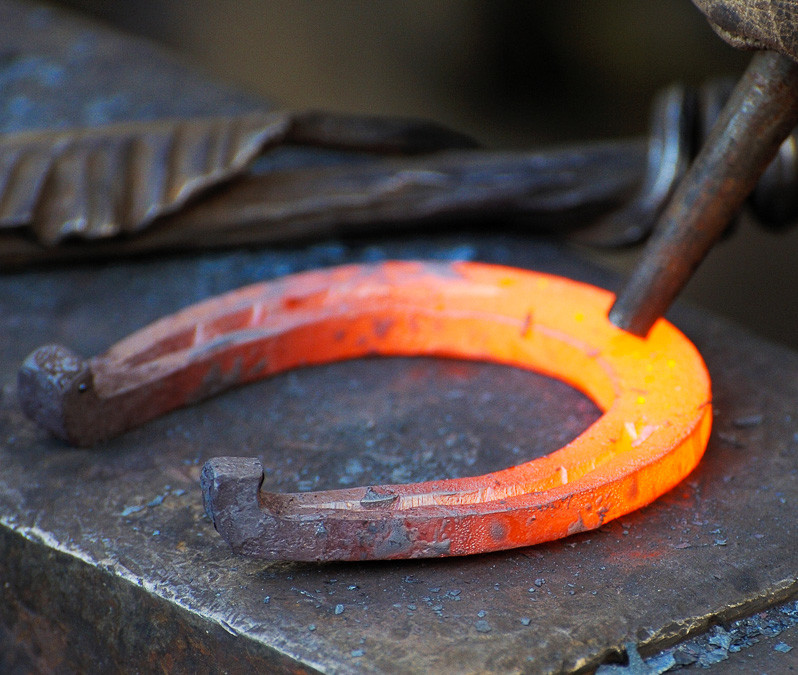
Horseshoe and its place in the Slavic house
Most often, the horseshoe was placed on the symbolic border of the “home space”. The Serbs buried it under the doorstep or in the foundation of the house during construction. Eastern and southern Slavs nailed a horseshoe on the doorstep or hung over the doors, as well as in the barn.
ꏍ
In the Carpathians, a horseshoe, together with an old shovel, was stuck into cabbage beds in the garden, so that people would look at these objects (and not at the cabbage) – in order to protect the crop from being “jinxed”. In Polesie, a horseshoe was placed under a girl’s pillow at night as part of a love magic ritual “to attract the boys.”
ꏍ
A horseshoe was nailed at the doorstep to “attract wealth to home,” as they said in Zhitomir (Ukraine), or for “people to be healthy like a horse,” as they said in Brest (Belarus). In Serbia, for a housewarming party, a horseshoe was nailed in front of the new house, “so that the happiness would go into the house, and not from it”. According to the Slavic tradition, a horseshoe found on the road was endowed with such special powers more than others.
ꏍ
Do you have a horseshoe at home? Where do you keep it and for what purpose?
ꏍ
To be continued…
ꏍ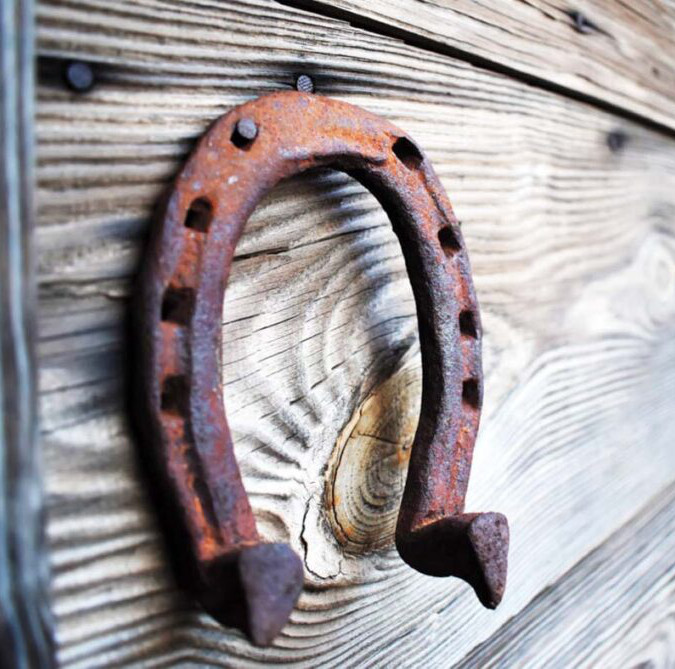
Horseshoe in Slavic tradition
Horseshoe in Slavic tradition served as a talisman both for people and house animals. It protected home from the evil eye and spirits, did not allow witches and sorcerers to “steal” milk from cows. And diseases, as the eastern and southern Slavs believed, were “captured” by the horseshoe and were not able enter the house.
ꏍ
In Russia, Serbia and Belarus, a horseshoe placed on the border of the home space was also believed to have a fertility/ producing power. It was perceived as an amulet capable of bringing good luck, happiness, fertility for people and animals, good cattle milk yield. In Polesie region, horseshoe was also used in love magic. ?
ꏍ
Such properties of the horseshoe are due to the ability of iron to ward off evil spirits, as well as the method of crafting it (the blacksmith, forging the horseshoe, beats it with a hammer) and the fact that it was associated with a horse that trampled the horseshoe with its feet.
ꏍ
What properties do you think a horseshoe from a gift shop has?
ꏍ
To be continued…
ꏍ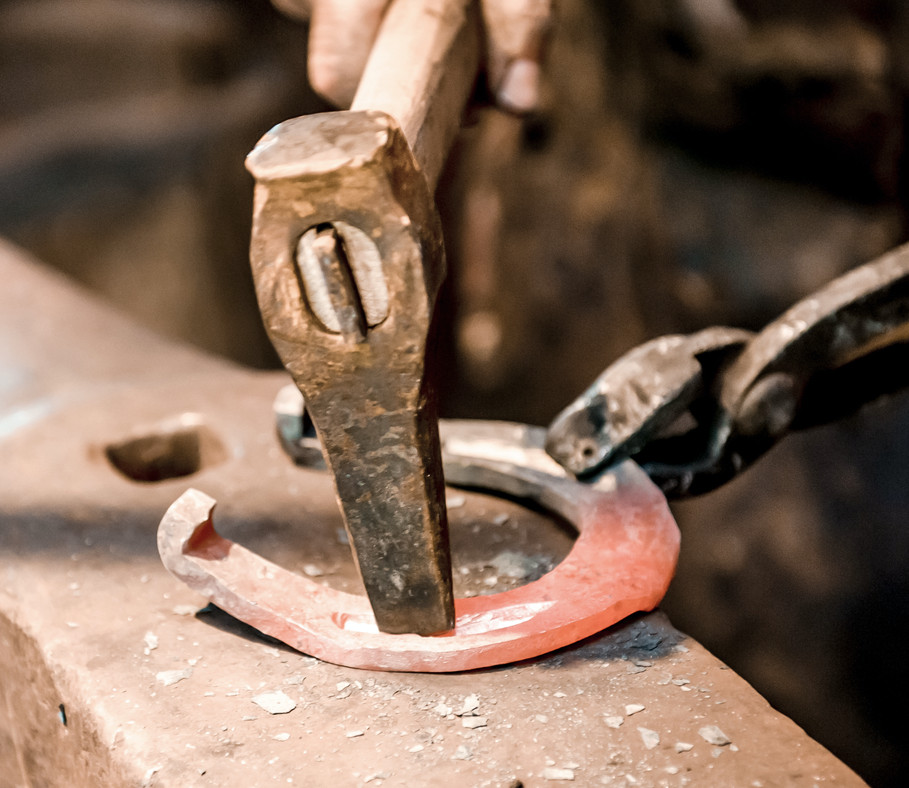
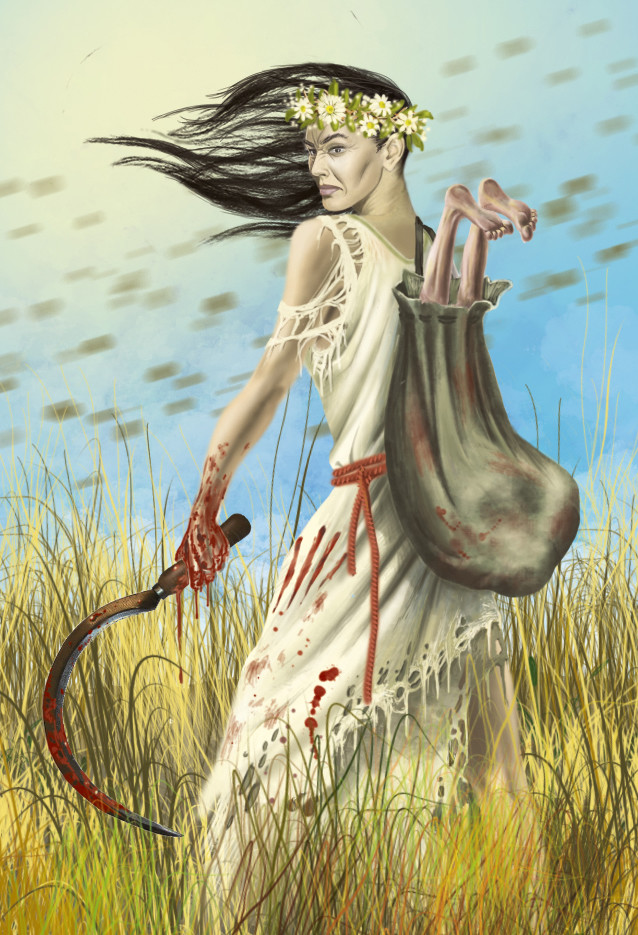
The fear of Poludnitsa
In Czechia, Poludnitsa punished mothers who violated the ban on working within six weeks after the childbirth. In later beliefs, Poludnitsa became a character used by adults to frighten children so that they did not go to the fields alone, did not go outside at noon, and went to bed on time. Russians used to say: “Do not go to the rye field, Poludnitsa will give you a burn”. Polish: “Nie chodź do grochu, bo cię przypołudnica weźmie” [Do not go to the field of peas, or Poludnitsa will take you].
ꏍ
To be safe from Poludnitsa, one needs to follow certain rules at noon. The Russians and Western Slavs at this time were forbidden to work or sleep in the field and near its edge. In Arkhangelsk region, people kept the window shutters closed, did not leave the house and did not let the children out, in a fear that Poludnitsa would tickle a person to death or take the child away.
ꏍ
In the Russian North, it was forbidden to swim and wash clothes in the period from 6 to 19 July in order to avoid the attack of Poludnitsa. People there also believed that if Poludnitsa appeared near someone – that person needed to lie down, so that she would not harm them. Lusatians believed that Poludnitsa, upon meeting a person, asked him/her about how to grow and process flax – and if that person is unable to give an answer, then she chopped his/her head off.
ꏍ
Well, do you know how to grow and process flax ?! ? ? ?
ꏍ
More interesting facts can be found in: “Slavic Antiquities” – encyclopedic dictionary in 5 volumes by Institute for Slavic Studies of the Russian Academy of Sciences.
Artist: Dawid Urbaniak https://urbaniakdawid.artstation.com
ꏍ