

🌬 The Matter of Magic: The Anti-Language of the Abyss (Part 3)
In the mundane world, whistling is merely a casual pastime or a practical signal, but in Slavic folk cosmology, it is understood as a direct acoustic intrusion from Nav’—the realm of the dead. For the unclean forces, whistling replaces human speech, serving as the native tongue of the restless dead, demons, and elemental spirits.
🪦 Voices of the Unquiet Dead
Whistling and high-pitched piping are the telltale signs of the *navia*—the unquiet souls of stillborns, unbaptized infants, and women who died in childbirth. Crossing paths with them demands absolute discipline. A Rusyn from the eastern Slovak village of Jakubany knows: when encountering a spirit of the dead, one must never look back over their shoulder. Violate this taboo, and the dead will begin to whistle, seizing immediate and absolute dominion over the living.
⛏ Echoes of Mine and Mire
Answering this sound in the wild is invariably fatal. Czech miners descend into the pit in absolute silence; singing worldly songs or whistling is strictly forbidden, as it instantly summons the *permoníci*, perilous subterranean spirits. In Western Slovakia, the night traveler remembers: whistle upon sighting a will-o’-the-wisp (*svetlonos*), and the entity will drag you through the bogs until dawn (*“keď na to svetlo (svetlonosa) zapískal, do rána sa ťa vláčilo”*). Lithuanian tradition echoes the Slavic: it is through a whistle that the hairy water-shepherd issues commands to the lake bream, bidding them thrash their tails.
🏚 The Breached Threshold
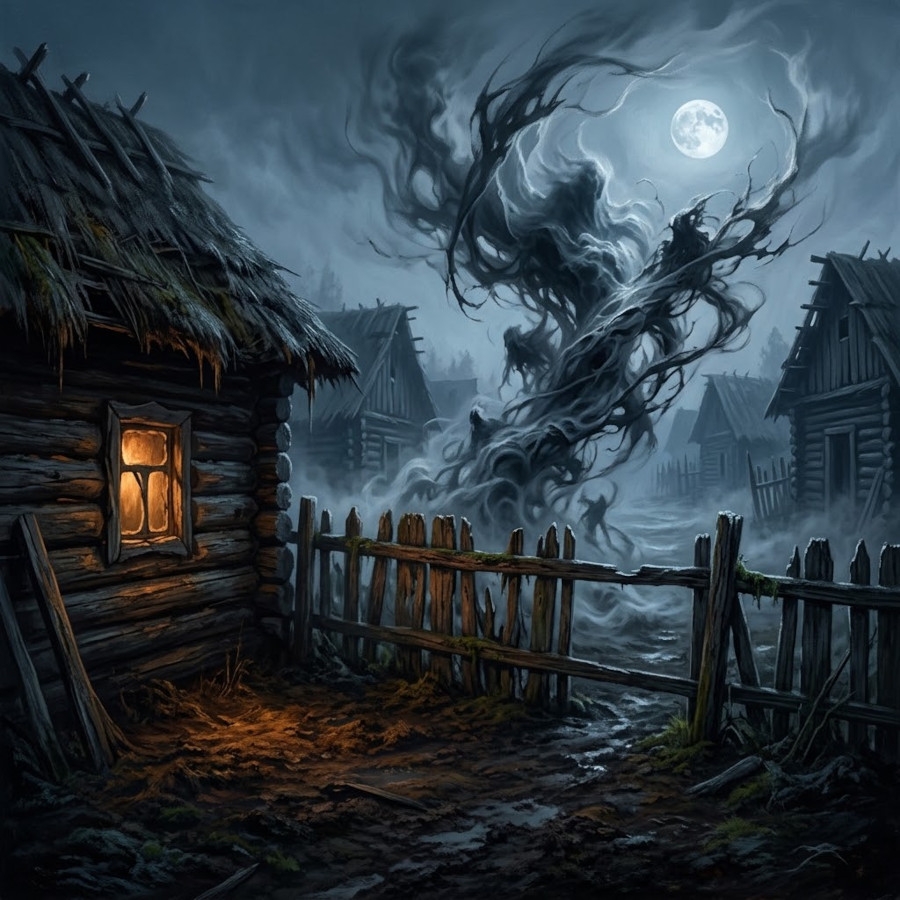
When a mortal whistles, it is seen as a willful invocation of demonic forces, rupturing the protective wards of the homestead. In the Gomel region, whistling in the yard is strictly taboo: the yard will instantly turn barren, the wind will begin to howl, and unclean forces will flock to the sound (*“на свіст злятаецца нячыстая сіла”*). The disturbed *domovik* (house spirit) will inevitably manifest, enraged at being summoned in vain.
ꏍꏍꏍꏍꏍꏍꏍ
In the Slavic grammar of survival, whistling is not the sounding of notes, but an acoustic breach of reality. By forcing air through the lips with that specific pitch, a person literally speaks the language of the Abyss—drawing the attention of those to whom this tongue is native, and willingly dismantling the threshold between the consecrated world and the yawning chthonic void.
🗣 In modern life, the superstition remains deeply rooted: “Don’t whistle indoors, or you’ll whistle all your wealth away.” How do you explain the enduring vitality of this specific ban? And what other sounds, to your mind, have the power to draw in misfortune or shatter the sanctuary of the home?
For further reading: M. M. Valentsova, *Methods of Magical Influence in Traditional Slavic Culture: To Blow, to Spit, and to Speak.*
#ethnography #slavicmythology #superstition #folklore #darkfolklore