
Greetings, travelers! Shake the snow from your boots and gather round the hearth. Today, we aren’t merely turning the pages of history—we are touching magic that still runs through our veins.
I have pored over ancient scrolls and ethnographic records to weave a single tale for you: the story of The One Who Comes First.
Here is a four-part series on the Polaznik—the most enigmatic figure of the winter cycle.
ꏍꏍꏍꏍꏍꏍꏍ
Part 1/4
The Divine Guest upon Destiny’s Threshold
Who is the POLAZNIK? And why did the fate of an entire clan hinge upon the very first knock at the door?
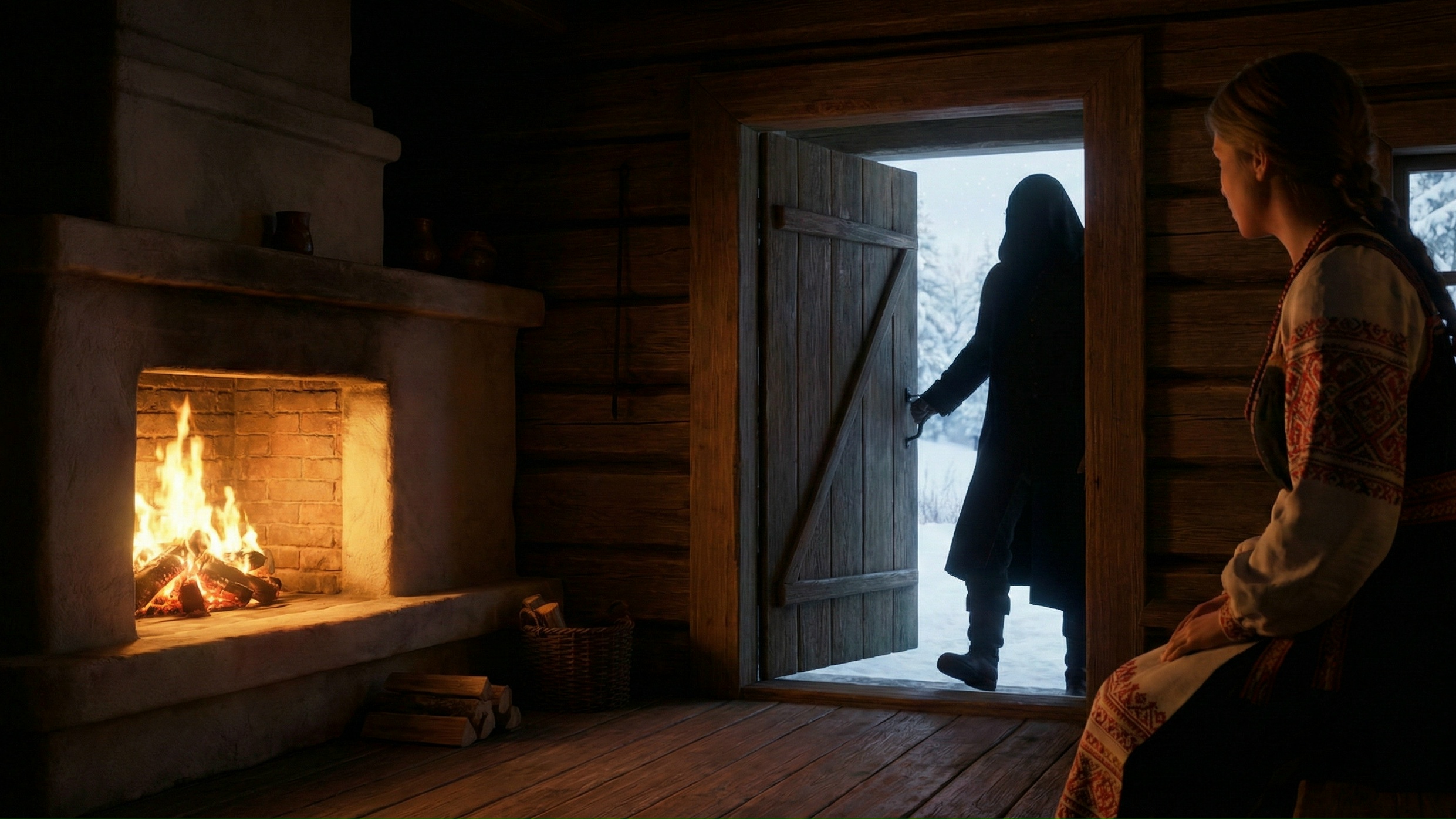
Have you ever paused on the morning of January 1st, wondering who would be the first to call or text? In that quiet flutter lies the echo of an ancient fear and hope. Meet the Polaznik (also known as *polažar*, *radovan*)—a figure who, in Slavic tradition, was never merely a guest, but the living embodiment of Fate itself.
For our ancestors, the New Year was no mere date on a calendar; it was a sacred turning of the wheel, a magical rift in time. It was believed that the first soul to cross the threshold during the winter solstice cycle (be it Christmas, Saint Ignatius’ Day, or the New Year) shaped the household’s destiny for all twelve months to come.
Three Faces of the Sacred Guest:
🕊 Herald of the Otherworld. The Polaznik was deemed a conduit between the land of the living and the realm of the ancestors. He was feasted not simply as a neighbor, but as an emissary of the divine, appeasing departed kin through his warm reception. In the region of Polesie, a remarkable relic of this rite survived: the master of the house would knock on his own window from outside, and to the question “Who goes there?”, he would answer, “God Himself is knocking,” bringing tidings of a bountiful harvest.
🗝 A Living Talisman. The identity of this first visitor was of paramount importance. Nothing could be left to chance! Householders often made secret arrangements in advance with someone known to be fortunate, robust in health, and “light on their feet.”
👶 The Innocent Angel. Often, the mantle of the Polaznik was entrusted to children. Their ritual purity and innocence were believed to ward off misfortune and bring health and peace to the home.
ꏍꏍꏍ In the folk consciousness, his arrival carried not personal, but collective, fateful significance: he was the forerunner, the omen of everything awaiting the family in the year ahead. ꏍꏍꏍ
We are accustomed to thinking that fortune is blind. Yet the tradition of the Polaznik teaches us otherwise: fortune can be summoned, welcomed, and even fed at your table.
Whom would you choose as your “Polaznik” today to ensure an ideal year?
#slavicmythology #slavicfolklore