

🐉 The Realm of the Flying Serpent: Petrified Scales and the Fractures of the Danube (Part 1)
In the Russian villages of Romanian Dobruja, the sacred verse (*dukhovny stikh*) of Saint George and the dragon is no mere bookish parable, but a stark topographical reality. For the Lipovan Old Believers dwelling among the Danube’s estuaries and lakes, this chthonic menace is literally branded into the landscape. Here, the mythical beast is not simply a character of folklore, but a colossal, land-shaping force whose physical traces still govern the region’s geography and the daily lives of local fishermen.
🌊 Scars upon the Earth
The roar of this titan in flight, as the village elders tell it, shakes the earth with such terrifying force that it sounds like a heavy airplane droning through the sky. Yet the most striking remnants of that ancient clash lie etched into the riverbeds. The jagged bends of the Danube’s Sfântu Gheorghe (Saint George) branch are no mere accident of nature. In the eyes of local lore, these are gargantuan ruts, bends, and gouges torn into the earth by the serpent’s writhing coils as it flailed in sheer terror, desperate to escape Saint George the Victorious bearing down behind with his leveled spear. The serpent plunges toward the sea, savagely turning up the soil and carving out a wide channel churning with silt and murky water.
🪨 The Impenetrable Bed
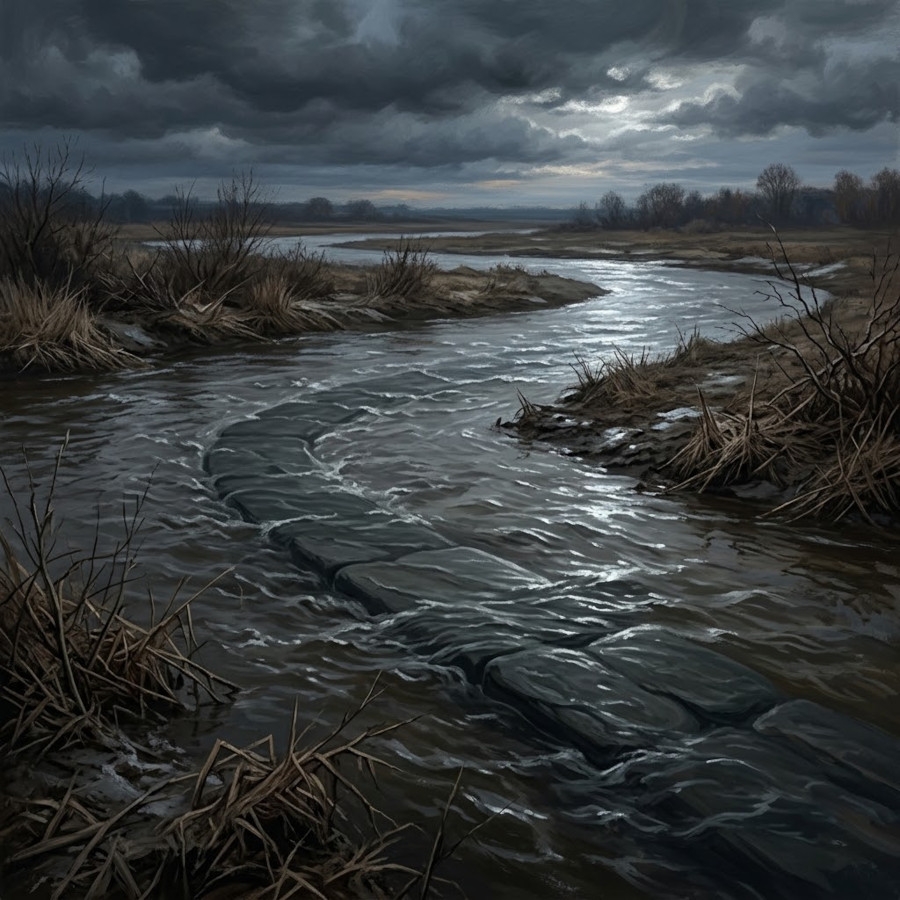
The creature’s petrified remains, as the Lipovans firmly believe, still lie submerged beneath the waves. In Lake Razim, between the shore crowned by the ruins of an ancient fortress and the islets of Popina and Popineț, runs an anomalous underwater track. The fishermen of Sarichioi call this smooth, unyielding strip the *shushava* (from the Romanian *șoseaua*—”highway”). At this crossing, the stone carapace underwater stretches as wide as a peasant homestead, making it entirely impossible to drive stakes into the ground to moor fishing nets (*matuny*). To the fishermen, this hardness carries a chillingly precise explanation: buried deep within the mire lies the serpent itself, and the sharpened poles simply glance off its impenetrable, fossilized hide.
To be continued…
ꏍꏍꏍꏍꏍꏍꏍ
To the traditional mind, the natural landscape is an open chronicle of primeval cataclysms. Man does not simply inhabit physical space—he navigates daily across the body of a shackled yet lingering chthonic evil, feeling the hardness of serpent scales beneath the keel of his boat and tracing the path of an ancient hunt in the fractures of the riverways.
🗺 Everyday geography often bears the indelible mark of myth. What strange hills, unexplained hollows, winding riverbeds, or “cursed” tracts of wasteland in your corner of the world does local lore still bind to the physical presence of unholy forces, primeval monsters, or sleeping giant warriors?
#ethnography #slavicfolklore #folklore #oldbelievers #legends