
🏰 Realm of the Flying Serpent: Eraclea Fortress and the Weeping from Beneath the Earth (Part 2)
At the epicenter of the serpent myth in Romanian Dobruja stand the massive ruins of the medieval fortress of Enisala (known in local parlance as Eraclea or Nikyoi). Through the eyes of the Old Believers, this is no mere historical monument, but a physical arena where a chthonic tragedy plays out. It is here, behind its imposing walls, that a mythical king hides; and it is here that the winged serpent flies in from dark waters to claim its tribute of human flesh.
🕯 Paschal Weeping
The ruins are not dead—they have a voice. The Old Believers know that on the night of Pascha, as the first joyous cry of “Christ is risen!” resounds, desperate weeping and cries for help erupt from beneath the fortress earth. The myth here is multi-layered: some hear the voice of the doomed Tsarevna Anna; others, the moans of a local maiden stolen away by a sorcerer and sealed deep within the subterranean vaults. Yet the most terrifying tale claims that the subterranean shrieks belong to a child cursed by its own parents (“*Ryatuyte, myane hryzut!*”—Save me, they’re gnawing on me!), dragged down into the darkness by an unclean force. A mother’s curse functions here as an irreversible metaphysical mechanism, tearing a breach straight into the underworld.
🪨 Marks of Futility
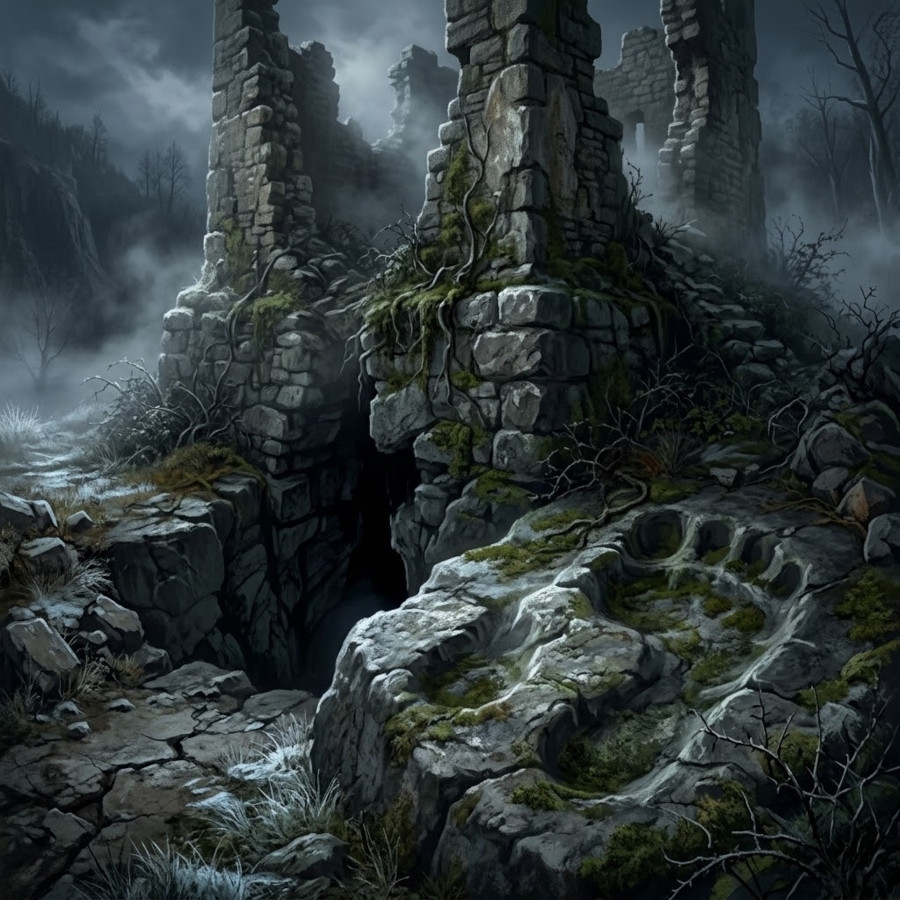
The stones of Eraclea bear tangible evidence of ancient magic. Deep indentations shaped like human shoulders and feet can still be seen pressed into the bedrock near the fortress. Locals explain that these are the marks left by a nameless *bogatyr* who attempted to literally tear the mountain inside out to free the captive maiden from the vaults. But chthonic powers—or the wicked sorcerer—turned the surrounding earth into a treacherous mire, binding the savior fast. The Romanian villagers of Enisala, living alongside the Old Believers, also sense the deep peril of this place: they call the fissure near the ramparts *gaura zmeului* (the serpent’s pit) and, each spring, tie a *mărțișor* talisman to a wild dog-rose bush to buy peace from the unseen evil.
To be continued…
ꏍꏍꏍꏍꏍꏍꏍ
Ancient stones are never silent. In traditional lore, ruins are an unhealed wound upon the body of the earth, where the veil between worlds remains torn wide open. Indentations on the rocks and voices from the depths prove that an act of magic—be it a parent’s curse or malicious sorcery—leaves an indelible mark upon the landscape, trapping the victim in a loop of timelessness, condemned to cry out until the end of days.
🗝 Folk memory often binds eerie sounds or inexplicable stone markings to real geographic landmarks. What ruins, caves, or boulders bearing enigmatic “footprints” or phantom voices exist in your region, and whose unseen presence do the local tales blame for them?
#folklore #ethnography #legends #folktraditions #slavicmythology