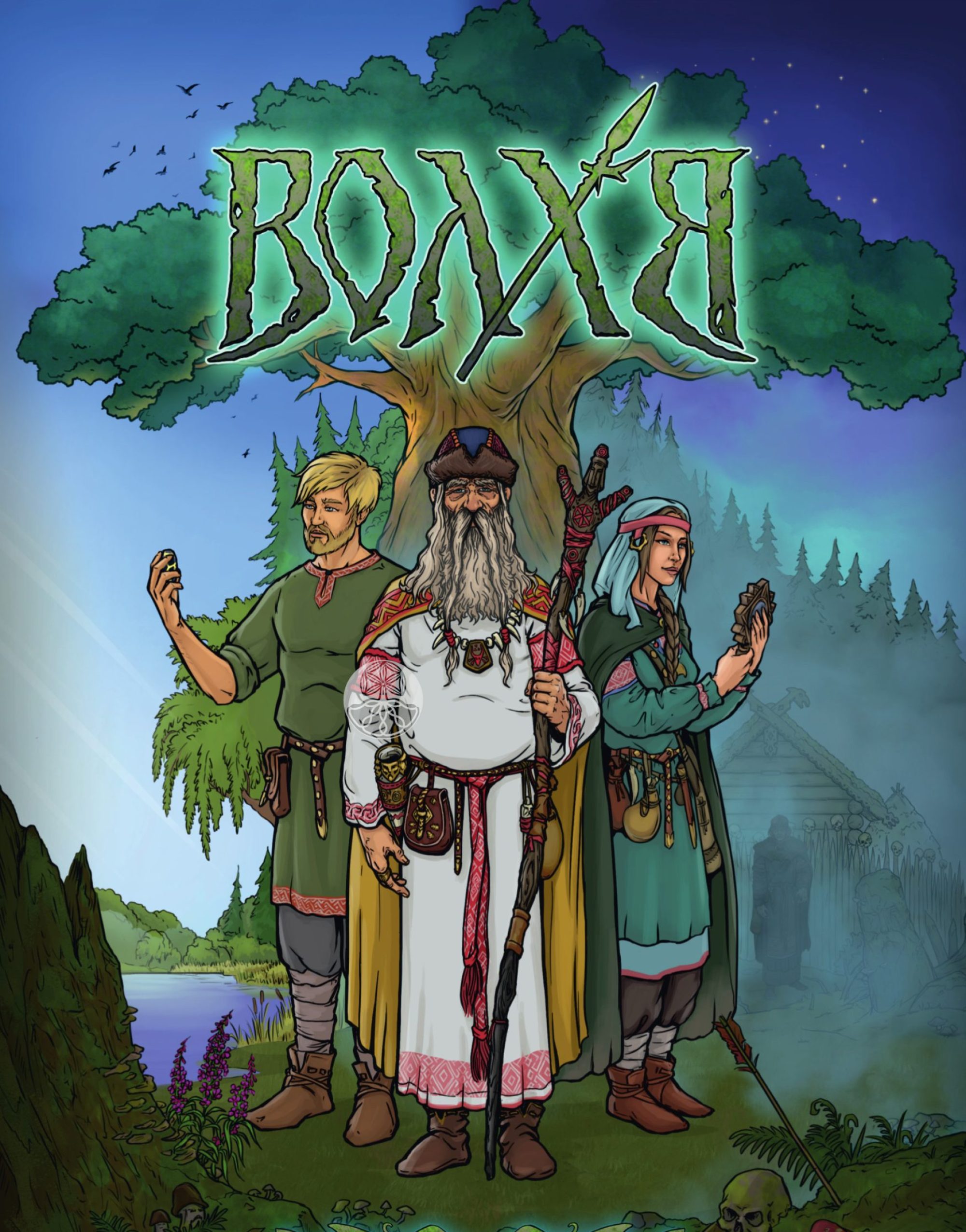
The second soul of a Dvoedushnik is able to separate from the body during the sleep, and “live an independent life” – mostly to harm people, as the Slavs of Poland and the Carpathian region believed. It could strangle sleeping people (if it took a form of Zmora), take away people’s health or life (vampire, Bosorkun, Opyr/Nochnik), steal milk from other people’s cows (Bosorkanya), turn into a wolf and attack people (Volkolak-werewolf).
ꏍ
While the soul is wandering around the world, it is impossible to wake up Dvoedushnik. The soul leaves and returns to the body through the mouth in a form of a fly, mouse, etc. And if you change the position of the sleeping person, for example, turn his head to the place where the legs were, then the soul will not be able to return, and Dvoedushnik will die. During the day, his behavior is no different from that of ordinary people, and Dvoedushnik does not remember anything about the “adventures” of the second soul while he was asleep.
ꏍ
Do you think Dvoedushnik more deserves pity or condemnation?
ꏍ
To be continued…
ꏍ

Mirko put down his short spear
“…Mirko put down his short spear and rubbed the large hoof print on the cold ground…”
ꏍ
Our graphic novel about customs and beliefs of the Slavic people in the early Middle Ages is available here: https://www.slovene.online/boar
ꏍ
Dvoedushnik – a person with two souls
Dvoedushnik (literally “a person with two souls”) – this is how in Poland and Western Ukraine people called a person born with two souls (or two hearts) – human and demonic. And therefore, it was believed that they have demonic attributes. Evil entities like Vampire, Zmora, Volkolak (werewolf), Bosorkanya, Topielnik, and a person with an “evil eye” – all come to existence from a Dvoedushnik. They could be recognized from ordinary people by few distinctive signs: they are born with teeth, they talk to themselves, there have two curls of hair on the top of their heads. Also, the Poles believed that they were sleepwalkers walking on rooftops in their sleep.
ꏍ
While Dvoedushnik is asleep, his second soul leaves the body to harm people. Moreover, this does not depend on the personal will of the Dvoedushnik, as he is forced to do so at a certain moment, otherwise he will die. The demonic soul of the Dvoedushnik can take a form of a human or of a dog, cat, snake, bat, even a wheel or a fireplace poker.
ꏍ
I wonder how a wheel or a fireplace poker can harm a person on their own? ?
ꏍ
To be continued…
Pic: Darren Hopes
ꏍ
Chicken God – part 2
The ancient Slavs endowed the stone with a natural hole with the symbolism of belonging to the “other world” and used it not only as a “Chicken God” (see our previous post). Russians, for example, hung it at the head of the bed to prevent nightmares, and the Slovenes wore it around the neck as an amulet against a vampire.
ꏍ
Serbs called such a stone “шупљи камен”, Slovenes – “votel kamen”. They used it to heal and protect people and livestock from Veshtitsa and Mora. In the Banat region, a cow was milked through it to prevent Veshtitsa from “stealing the milk”. In case of breast illness, a nursing mother pumped milk through this stone. Croats treated fever by water poured through its hole. And people in Bosnia and Montenegro used such a stone to cure from urinary incontinence by urinating through it.
ꏍ
How would you use such a stone if found one?
ꏍ
More interesting facts can be found in: “Slavic Antiquities” – encyclopedic dictionary in 5 volumes by Institute for Slavic Studies of the Russian Academy of Sciences.
ꏍ
Concept art for the main character
Concept art for the main character – a young Slavic hunter named Mirko, from the Lendians tribe…
ꏍ
Our graphic novel about customs and beliefs of the Slavic people in the early Middle Ages is available for download here: https://www.slovene.online/boar (English) and https://slovene.online/isv/komiks-diky-vepr (Medžuslovjansky)
ꏍ