Comb in the Slavic tradition – Part 1

A comb was traditionally regarded by Slavs as sharp, pricking apotropaic object as well as female and erotic symbol. Due to its frequent teeth and contact with hair, it was also endowed with producing properties.

We continue to familiarize you with the customs and beliefs of the ancient Slavic people, while working on the animated fantasy comic book series. In such posts, as if jumping forward in time, we shed light upon and help to understand the events that will occur in our story … ;)

According to Bulgarian customs, the girl hid her comb from strangers, since it could be used to hex the owner. Thus, after combing, she would immediately wrap the comb in a towel and put it in a secret place. In Belarus, people were not allowed to leave the comb in an open place, believing that this could cause trouble. In Poland, if a comb fell on the floor, people would guess which visitor to expect – frequent or rare (depending on the frequency of the comb teeth).

In girls’ divination and in love magic, the comb symbolized a girl or was an attribute of a groom. In the Vologda region, the girls hung a comb outside the window and chanted: “My betrothed, come and comb your hair!”. In Polesie region, on Kupala night, the girls made a comb of “ant oil” and combed guys with it to bewitch.

“The Catalogue Of Rudolph’s Magic” (13th century) says about divination ritual using a comb by Slavs in Silesia: «They prepare water and put it together with a comb, oats and a piece of meat with these words: “Come, Satan, take a bath, comb your hair, give oats to your horse, and meat to your hawk, and show me my husband”». In Eastern Serbia, around a new year, girls would put fragments of a comb, a piece of coal, soot, a mirror, etc. under the shards: whoever pulls out a comb fragment will get a groom “with teeth”. The comb was given to the bride at a Russian wedding; among the Serbs, the mother-in-law always gave the daughter-in-law a comb along with other gifts.

To be continued…

Source: “Slavic Antiquities” – encyclopedic dictionary in 5 volumes by Institute for Slavic Studies of the Russian Academy of Sciences.
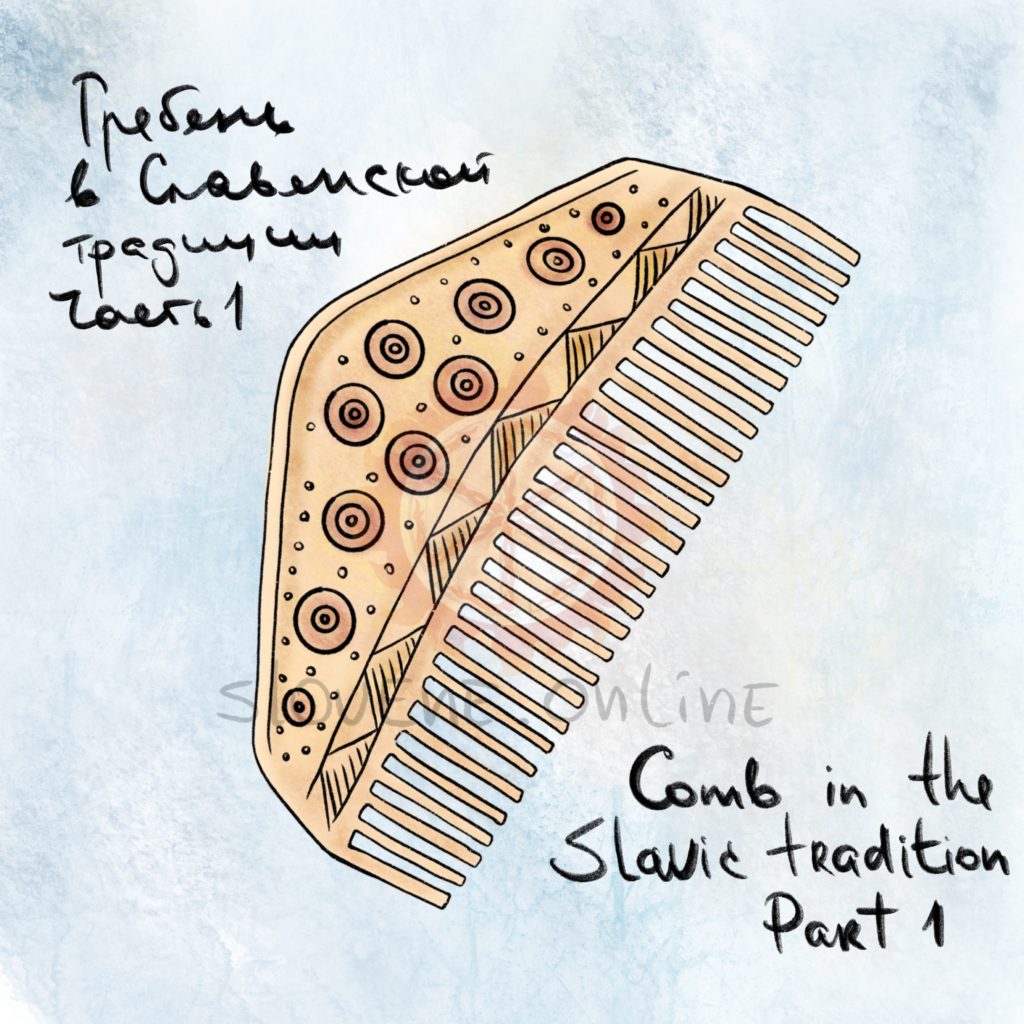
Slavic comb

Calling for BETA testers!

We are now TESTING online a pilot fragment of a first story from the animated fantasy comic book series about the life, customs and beliefs of the Slavic tribes in the early Middle Ages. We NEED YOUR HELP to make a good Slavic comic – please follow http://taplink.cc/slovene_online to learn how you can help with beta testing!

Working on storyboard panels

Working on storyboard panels of one of the scenes. Music and animation for the first fragment are finished, few technical tasks need completion…

We continue to work on the first story from the animated fantasy comic book series about the life, customs and beliefs of the Slavic tribes in the early Middle Ages.

BETA-TESTING OF THE FIRST FRAGMENT IS APPROACHING! Stay tuned ;)

Comic panels

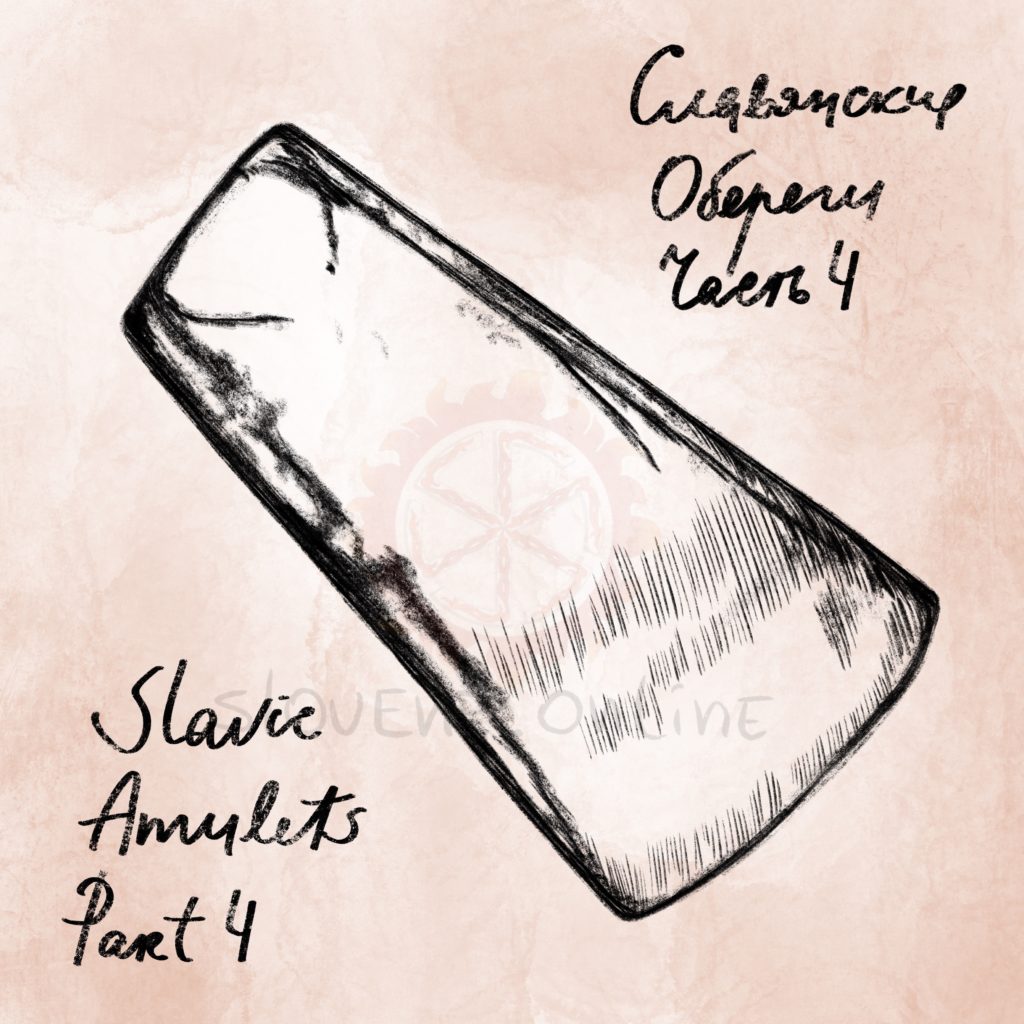
Slavic amulets – Part 4

Neolithic stone tools (“thunderstones”) were divided into two types: “thunder” arrows (mainly silicon arrowheads) and “thunder” axes and hammers (stone adzes and axes). Sometimes belemnites were also regarded as “thunder arrows”, but more typical name for them contained a “finger” in it (for example, Russians called them “Devil’s finger”, the name “God’s finger” was mostly used in Poland and Polesie).

We continue to familiarize you with the customs and beliefs of the ancient Slavic people, while working on the animated fantasy comic book series. In such posts, as if jumping forward in time, we shed light upon and help to understand the events that will occur in our story … ;)

The Slavs believed in the power of “thunder” stone tools as a talisman against evil spirits, jinxes and evil eyes. Ethnographers written down texts of many protective spells, which contained these objects as part of incantations. “Babushka-sorceresses”, who used thunderstones in healing magic, passed them down from generation to generation. Thunderstones were also talismans from thunderstorms and lightning: keeping them in the house protected from evil spirit entering home, and, therefore, shielded from a thunderbolt aimed at this spirit.

“Thunder arrows” were also carried as a personal amulet by both ordinary people and warriors in order to “defeat the enemy”. There was an interesting statement in the 18-century’s handwritten Healer Guidebook from the collection of the researcher Ivan Zabelin: “If someone carries a thunder arrow, he can defeat anyone with his strength, and no one can stand against him, even if they are stronger”. The amulet was worn on a string, in a pouch or sewn into clothes. Such ways of wearing amulets are known from the ethnographic materials of various Slavic nations.

This post was prepared based on the articles by E. A. Tyanina:
(1) “Tools of the Stone Age in the cultural layer of medieval Novgorod: pagan cult objects or random things?” // Novgorod and Novgorod land. History and archeology, 2008;
(2) “The discussion of the Perun’s cult in the Novgorod land (based on records of the archaeological research of Novgorod)” // COLLOQUIA RUSSICA; Series I, vol. 8; “Religions and beliefs of Rus’ (9th–16th centuries)”; Krakow 2018

Additional sources:
(3) “Slavic Antiquities” – encyclopedic dictionary in 5 volumes by Institute for Slavic Studies of the Russian Academy of Sciences.
(4) M.V. Sedova, “An amulet from ancient Novgorod,” Soviet Archeology, No. 4, 1957
(5) A.N. Afanasiev, “Poetic views of the Slavs on nature,” vol. I., 1865

Slavic amulets