
💨 Feasting with the Dead: The Ancestors’ Supper and the Open Flue (Part 2)
Calendar ancestor-memorial rites (*Dzyady*) are a time when the veil between worlds wears thin, and the dead return from the wilderness to their earthly homes. To allow the shades of the forebears inside, the Slavic *izba* undergoes an intricate spatial reconfiguration.
🚪 Gates for the Shades
During these days, the home’s protective threshold is deliberately breached. In Polesia and Belarus, the entrance doors and the chimney flue (*komin*) are left thrown wide open, granting the spirits unobstructed passage into the dwelling. Clean, ritual towels (*rushnyky*) are hung over the windows and doors—navigational beacons by which wandering spirits can identify the *khata* of their descendants in the dark. The domestic space is systematically prepared for a sanctioned invasion from the Otherworld.
🍞 Sustenance from Steam
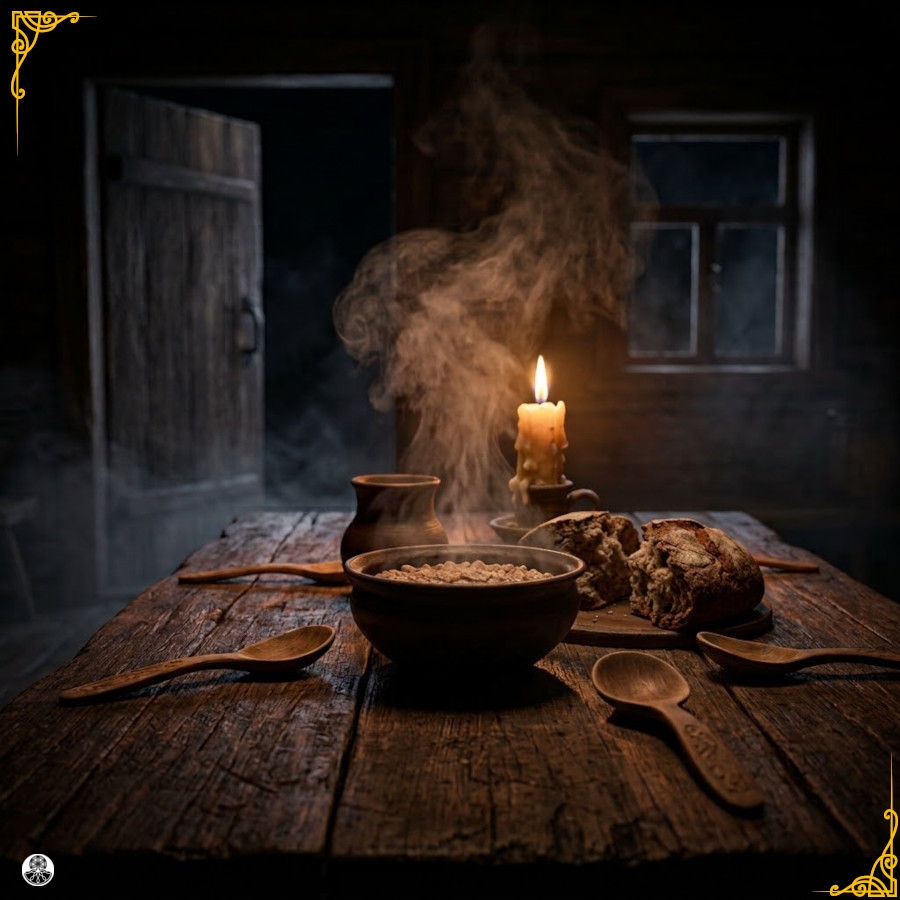
Devoid of physical bodies, the dead do not feed on the flesh of bread, but on its unseen essence: steam and scent. Steaming food is purposely set upon windowsills to beckon the ancestors. In Ukraine, windows are kept ajar even in the bitter chill of winter, allowing the souls to “swallow the steam rising from the hot bread.” During the family feast itself, the master of the house splashes the first spoonful of *kutia* and the first drops of vodka out the window, pours them directly onto the tablecloth, or casts them beneath the table with a ritual summons: *”Dzedu, idzi da abedu”* (“Grandfather, come join the meal”).
🥄 The Night Watch
When the living retire to sleep, the feast of the dead has only just begun. It is strictly forbidden to clear away unwashed dishes, leftover food, or half-emptied cups—they must remain on the table until dawn. Spoons are watched with unsettling vigilance: they must be placed bowl-up, lest the deceased turn over in their graves. To disturb this nocturnal repast is to court the wrath of chthonic guests. In the Gomel village of Stodolichi, they tell of an old woman who dared approach the table in the dead of night to grab a bite during *Dzyady*—an unseen force struck her to the floor on the spot and tumbled her violently across the *khata* until morning.
To be continued…
ꏍꏍꏍꏍꏍꏍꏍ
The ritual invitation of spirits into the hearth is no sentimental family reunion; it is the perilous admission of a chthonic power into one’s innermost sanctuary. The living voluntarily dismantle their home’s boundaries, throwing open doors and hearth flues into the dark to feed the dead—and, in doing so, seal a stern pact for ancestral protection and a fertile harvest.
🗝 Even today, many feel an instinctive dread of sweeping crumbs off a table with a bare hand or leaving the table completely empty overnight, while at wakes, a shot glass covered with a slice of bread remains a customary offering. How do you interpret this lingering fear of leaving the dead “hungry,” and what strict culinary taboos tied to ancestral memorial days are still observed in your kin?
#folklore #ethnography #slavictraditions #ancestorveneration #dzyady