🕯 Bloodline Engineering: Axis of the Cosmos (Part 2)
If the man in Slavic domestic architecture holds the outer frontier, it is the mother and wife who forge its inner gravity—the very axis of the cosmos. In the funeral laments of the Eastern Slavs, the loss of a mother is never merely personal grief; it is the ontological collapse of the home itself. Bereft of her, physical space instantly loses its sacred meaning: the house turns dark, deaf, mute, and *pustyly*—barren and desolate, as they say in the Russian North.
🏚 The Chilled Firmament
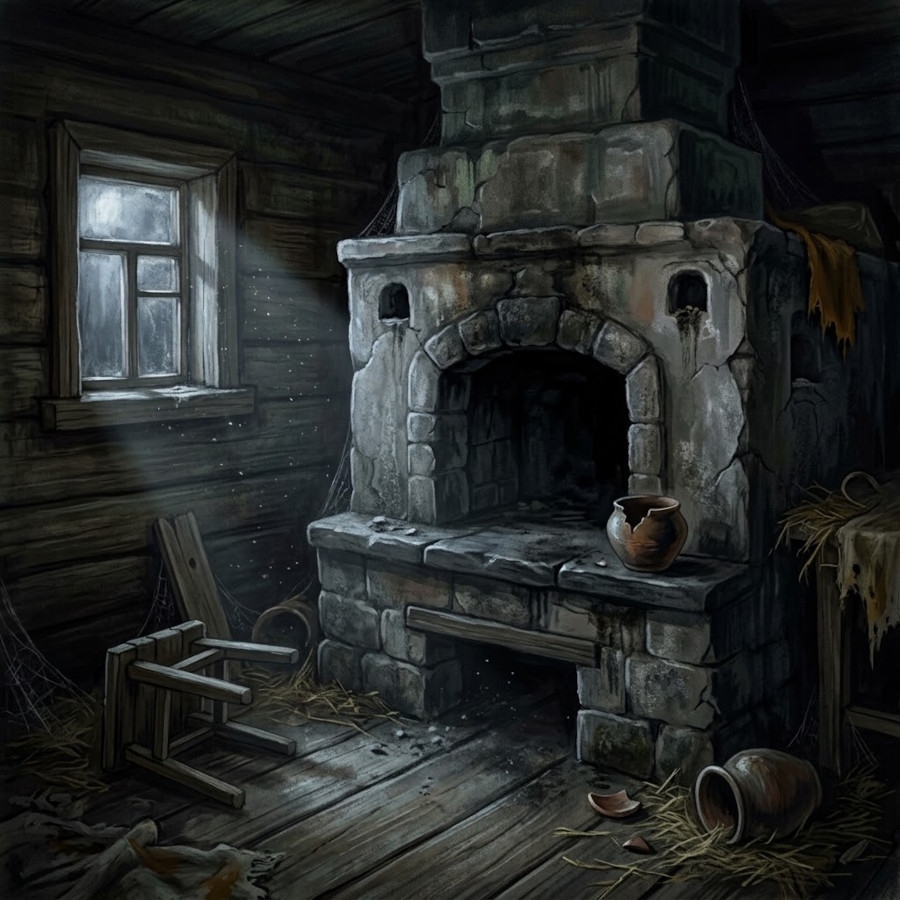
Ukrainian lament traditions capture a chilling spatial rupture: having returned from the burial, the daughter wails that she leans against the wall, yet it no longer gives warmth; the house appears unchanged, yet offers no solace. A devastating formula of ruin resounds: *“Ta y ta khata, y ta strikha [roof], ta u khati ne ta utikha”* (“The house is the same, the thatched roof is the same, but the solace within is no more”). The stove still stands, but speech has died around it; the thresholds remain, but conversations will cross them no longer. Deprived of its mistress, the home collapses back into an alien, hostile matter, powerless to shelter the orphan.
🗣 The Secret Word
The mother serves not only as spinner, reaper, and nurturer, but as the primary conduit through whom the lineage’s apotropaic, protective force circulates. In the Russian North, she is revered as the *tayna razgovorchitsa* (“secret confidante”) or *dumshchitsa* (“keeper of counsel”), and her speech as the *taynoye slovechushko*—the “intimate whispered word.” These are not idle fireside chats. This is a closed, sacred channel barred from outsiders, through which the mother dispels tension, soothes pain, and passes down hidden wisdom. To lose a mother is to lose that one irreplaceable “secret word” capable of sealing away sorrow and piecing a shattered world back together.
⚖ Truth Incarnate
In the Ukrainian and Belarusian traditions, the mother’s status is elevated to an absolute ethical law—she is wholly identified with *Pravda* (Cosmic Truth and Righteousness). Daughters cry out over the deceased: *“Moya nenko… moya pravdonko virnesenka!”* (“My dearest mother… my truest, most faithful Truth!”). Here, the mother stands as the supreme arbiter of justice and blood-deep sincerity. Orphaned children voice the cosmic catastrophe: *“My vzhe vid nikoho ne budem maty pravdy”* (“Never again will we find truth from anyone”). To lose a mother is to lose the sole wellspring of absolute, unshakeable truth in a world where everyone else is an alien wilderness—*chuzhaya chuzhina*.
To be continued…
ꏍꏍꏍꏍꏍꏍꏍ
The loss of a mother in the Slavic worldview is a fundamental fracture of space itself. She generates the unseen substance that turns the dead timbers of a log cabin into a sacred, fortified Frontier. Once she is gone, the *khata* immediately collapses into primeval chaos—bereft of warmth, stripped of the “secret word” and higher “truth”—leaving the soul face-to-face with the howling drafts of the Abyss.
🗝 Recall moments from childhood or adulthood when the physical presence of a single person instantly transformed the very fabric of space from hostile to utterly safe. Through what unseen, seemingly mundane domestic details is this living “axis of the cosmos” woven within your own home?
#ethnography #slavicmythology #folklore #mother #laments