
Drought from the *Zalozhnye*: The Magic of a Desecrated Grave
We previously spoke of the “pure” ritual by the well. But what if the drought had a darker cause? What if the heavens were “locked shut” in divine wrath?
🔥 Across Polesie, as throughout the wider Slavic world, people believed that a prolonged drought was an unmistakable sign of an “unclean” corpse in the village.
They spoke of the *zalozhnye*—the unquiet dead who suffered an “unnatural” death and were denied peaceful passage into the next world: suicides (the hanged, the drowned), murder victims, and the cursed. Custom strictly forbade burying such dead in the communal, consecrated graveyard.
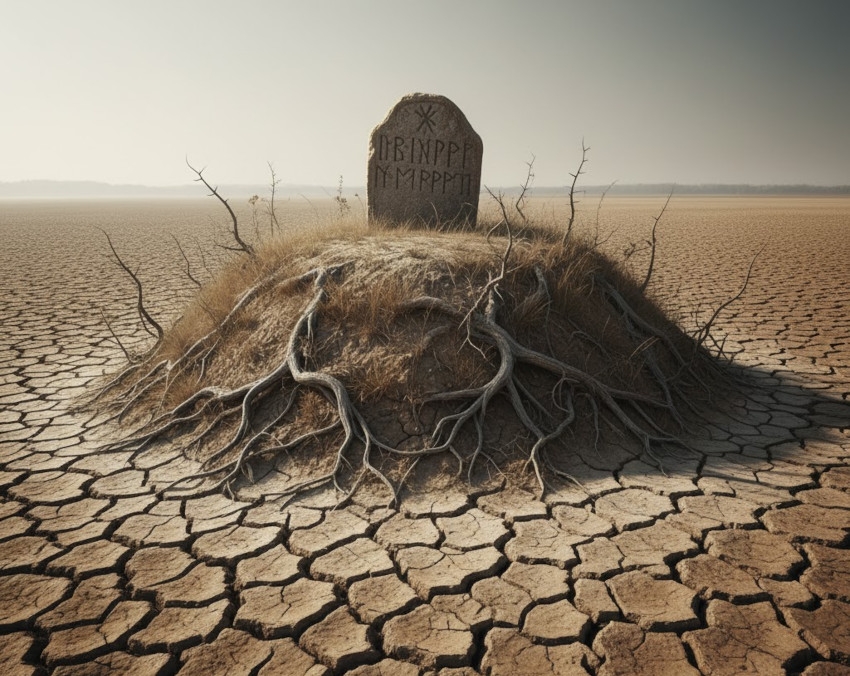
⚰ If, out of fear or pity, the village broke this taboo and laid a drowned soul or a suicide in hallowed ground, the earth itself was believed to be desecrated. The soil would “reject” the corpse. God’s wrath would fall upon the entire community, bringing withering drought.
What was to be done? Perform an unsettling counter-ritual.
💧 The mildest measure was to go to the grave of the “unclean” one and drench it with water. It was an act of sympathetic magic: *”We pour water over you, the guilty soul, so that you—or rather God, because of you—will pour rain down upon us.”* This was most often done at the graves of the drowned, who were seen as masters of water who had “dragged” the moisture into the earth with them and refused to let it go.
⛏ If that failed, the community turned to desperate measures. The men would uproot the cross from the grave of the hanged man or drowned soul. Sometimes it was ripped out and driven back into the earth three times, literally hammering it down into the soil.
💀 But if the skies still stayed dry, the rite was unleashed in all its primal dread: they dug up the corpse. D.K. Zelenin, whose work was later cited by Tolstoy, gathered dozens of such historical accounts. The defiled remains were hauled out of the churchyard and cast into a river or a peat bog. To their minds, this was the “proper” burial—returning water to water, fire to fire, the unclean to the unclean. Only then, the ancestors believed, was the earth cleansed, and the heavens “unlocked.”
ꏍꏍꏍꏍꏍꏍꏍ
It is chilling to realize that for the survival of the community, our ancestors were willing to desecrate the rest of the dead. The terror of famine eclipsed the dread of sin. What do you think: do the echoes of this mystical fear of an “unholy death” (suicide or passing under ominous circumstances) still linger within us, or have we truly become rational creatures?
For further reading on the subject: N.I. Tolstoy, *Essays on Slavic Paganism*.
#SlavicMythology #SlavicFolklore