In Southern Russian beliefs, Polevik is the personification of the field – naked, black as the soil, eyes of different colors, long green grass instead of hair, a beard of stalks, and he himself is a little ugly old man.
ꏍ
In the northern Russia regions, Polevik was imagined as a young man with very long legs. He is covered with fiery hair, has bulging eyes, horns and a long tail. Polevik uses his tail’s bushy tip to raise dust from the ground if he does not want to be seen.
ꏍ
Eastern Ukrainians believed that Polevik is covered with fur, has small horns and ears like a calf. But he can only be seen while asleep. In Kharkov region people imagined him as white as snow with a white beard. In Novgorod region in Russia – that he has grey hair. In Vologda region – that he simply dressed in white clothing, and that he can run very fast. So fast, that he seems to a person like a flashed spark.
ꏍ
Polevik can also change appearance: during the day he looks like a little man, and at night – like a flickering light. He can change his height, turn into a young or old person, or even a familiar neighbor.
ꏍ
So how can one recognize Polevik in a neighbor – any thoughts? ?
ꏍ
To be continued…
Artist: Anastasiya Lysenko https://www.instagram.com/sstu.arto/
ꏍ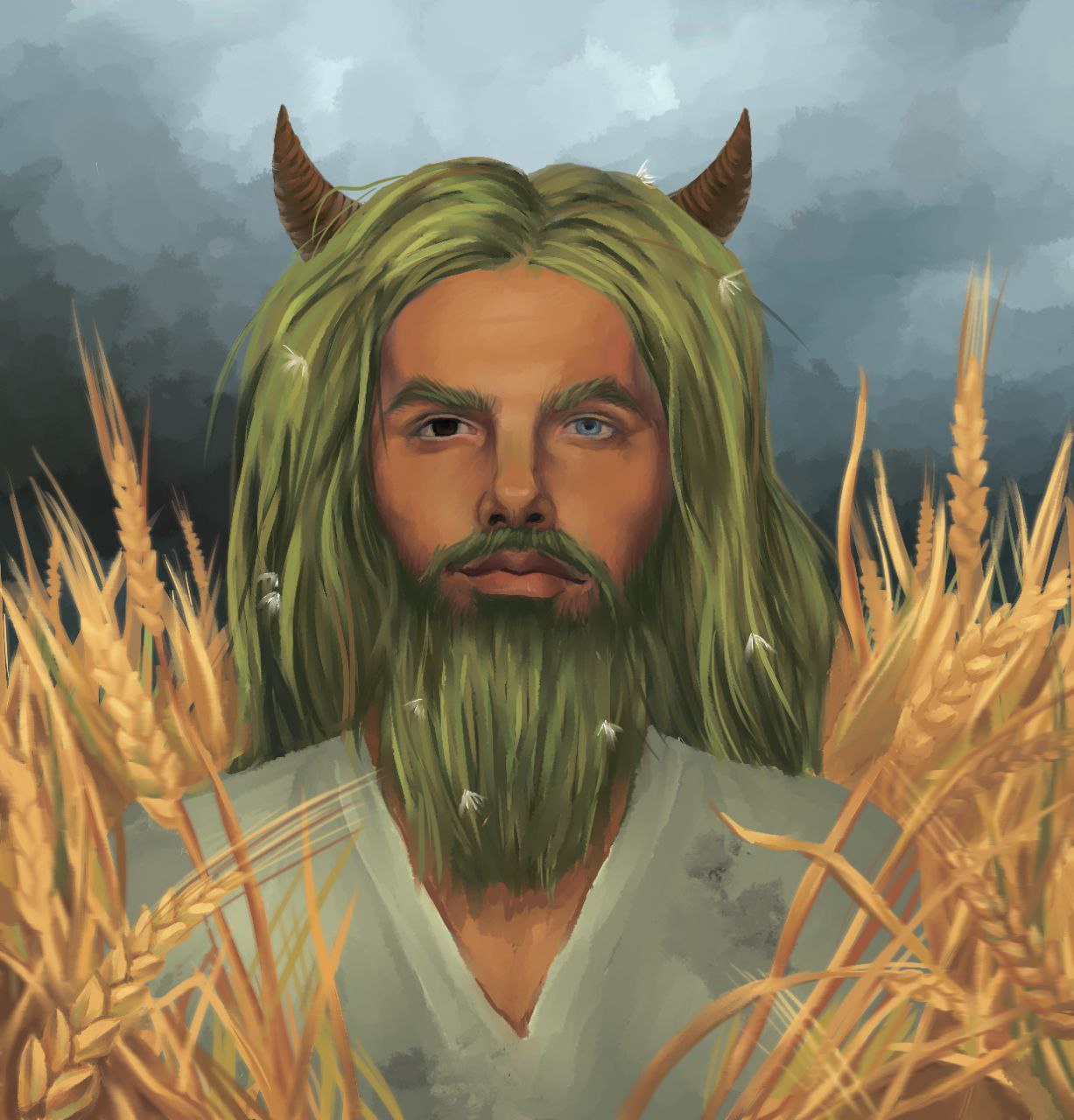
Polevik in Slavic tradition
Polevik is the mythological “master” of the field among the Slavs. He protects the fields and controls their productivity, vegetation and grain harvest, as well as the well-being of cattle grazing in the field.
ꏍ
In various regions, Polevik’s functions are slightly different. Some people believed that he observes grasses and cereal crops and takes care of their fertility. Some – that he guards the grain fields. Some even believed that he was a guardian of the treasures hidden in the field. In the north of Russia, it was believed that each field has its own Polevik.
ꏍ
Polevik was also guarding the field boundaries. At midnight he galloped on the horse or in a cart along the field boundary and could crush or take with him those who were on the way. Therefore, it was forbidden to sleep on the borders of the fields, especially at night, so that Polevik or his children (‘mezhevichki’) would not strangle a person.
ꏍ
The appearance of the Polevik was accompanied by a strong, gusty wind or a whirlwind. In Novgorod, it was believed that Polevik himself is the cause of the wind when he claps his hands, whistles or blows.
ꏍ
What other Slavic field defenders do you know?
ꏍ
Artist: Ivan Bilibin
Colored version: Photo Researchers
ꏍ
The dirt at the edge of the print was wet: the boar must have passed here not long ago…
PDF version of our graphic novel about customs and beliefs of the Slavic people in the early Middle Ages is available for FREE download here: https://www.slovene.online/boar
ꏍ
Horseshoe in Slavic rituals
Bulgarians in Thrace, during the “wolf days”, used to toss horseshoe into the fire so that the “wolf’s mouth would burn”. Housewives in Poland and Western Belarus used to heat a horseshoe on fire until it was red-hot, and then poured milk from a “spoiled” cow on it. Or they could throw the red-hot horseshoe into a milk pan in order to return the milk “stolen” by the witch to the cow and to punish that witch. They believed that the witch would come running to this house and try to steal something – if she did not succeed, she would die. In the Carpathian region of Ukraine, people believed that in order to free a witch from the power of evil spirits, one should nail a horseshoe to her bare foot.
ꏍ
Among the Bosnian Muslims, women, to cure infertility, girded themselves with an iron hoop, which was forged by a blacksmith at midnight from the horseshoe of a dead horse.
ꏍ
Sometimes, a horseshoe was used as a sacrifice. In Bulgaria, if a person got sick in some area, a horseshoe was left to the mythological owner of this place to “shoe his horse”. And in Serbia, a horseshoe and a nail were presented as a gift to the mythological creature Vileniak (half-human and half-vila with special powers over nature).
ꏍ
What other rituals with a horseshoe do you know?
ꏍ
More interesting facts can be found in: “Slavic Antiquities” encyclopedia by Institute for Slavic Studies of the Russian Academy of Sciences.
ꏍ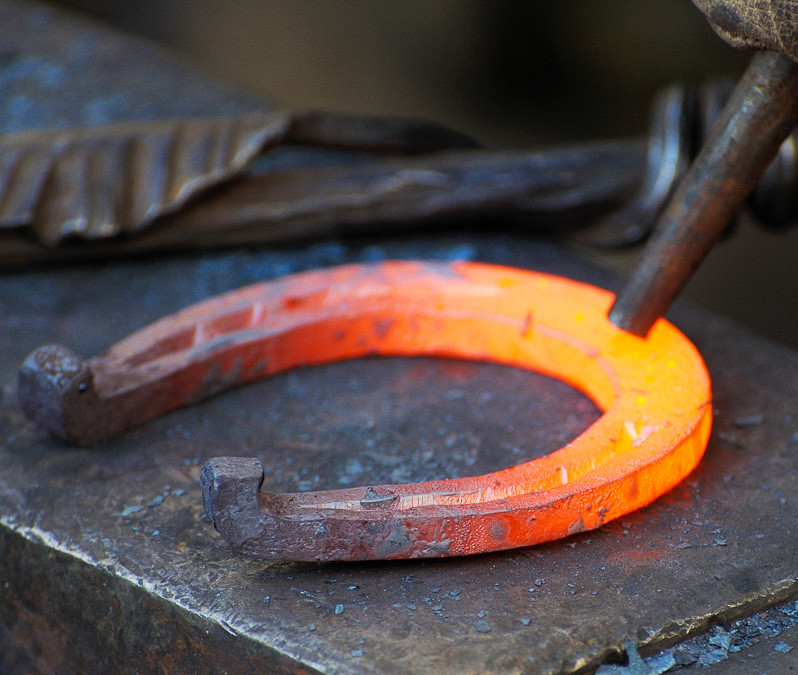
Horseshoe and its place in the Slavic house
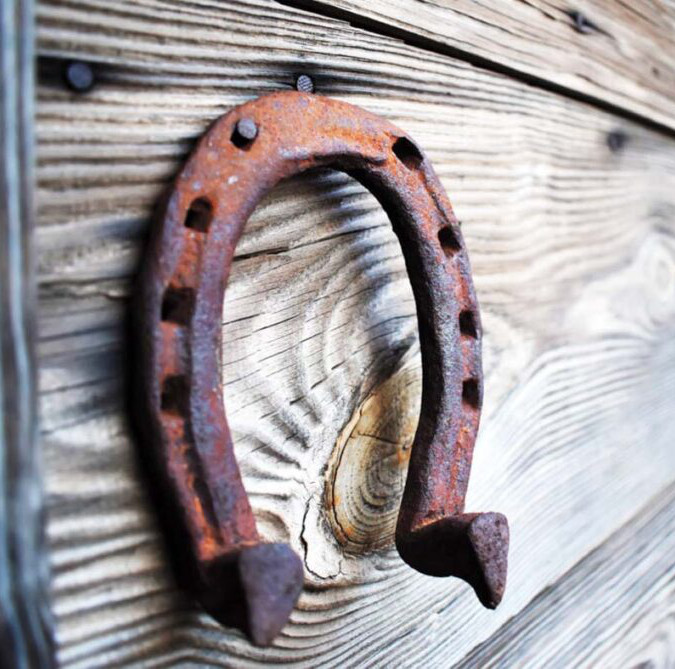
Most often, the horseshoe was placed on the symbolic border of the “home space”. The Serbs buried it under the doorstep or in the foundation of the house during construction. Eastern and southern Slavs nailed a horseshoe on the doorstep or hung over the doors, as well as in the barn.
ꏍ
In the Carpathians, a horseshoe, together with an old shovel, was stuck into cabbage beds in the garden, so that people would look at these objects (and not at the cabbage) – in order to protect the crop from being “jinxed”. In Polesie, a horseshoe was placed under a girl’s pillow at night as part of a love magic ritual “to attract the boys.”
ꏍ
A horseshoe was nailed at the doorstep to “attract wealth to home,” as they said in Zhitomir (Ukraine), or for “people to be healthy like a horse,” as they said in Brest (Belarus). In Serbia, for a housewarming party, a horseshoe was nailed in front of the new house, “so that the happiness would go into the house, and not from it”. According to the Slavic tradition, a horseshoe found on the road was endowed with such special powers more than others.
ꏍ
Do you have a horseshoe at home? Where do you keep it and for what purpose?
ꏍ
To be continued…
ꏍ