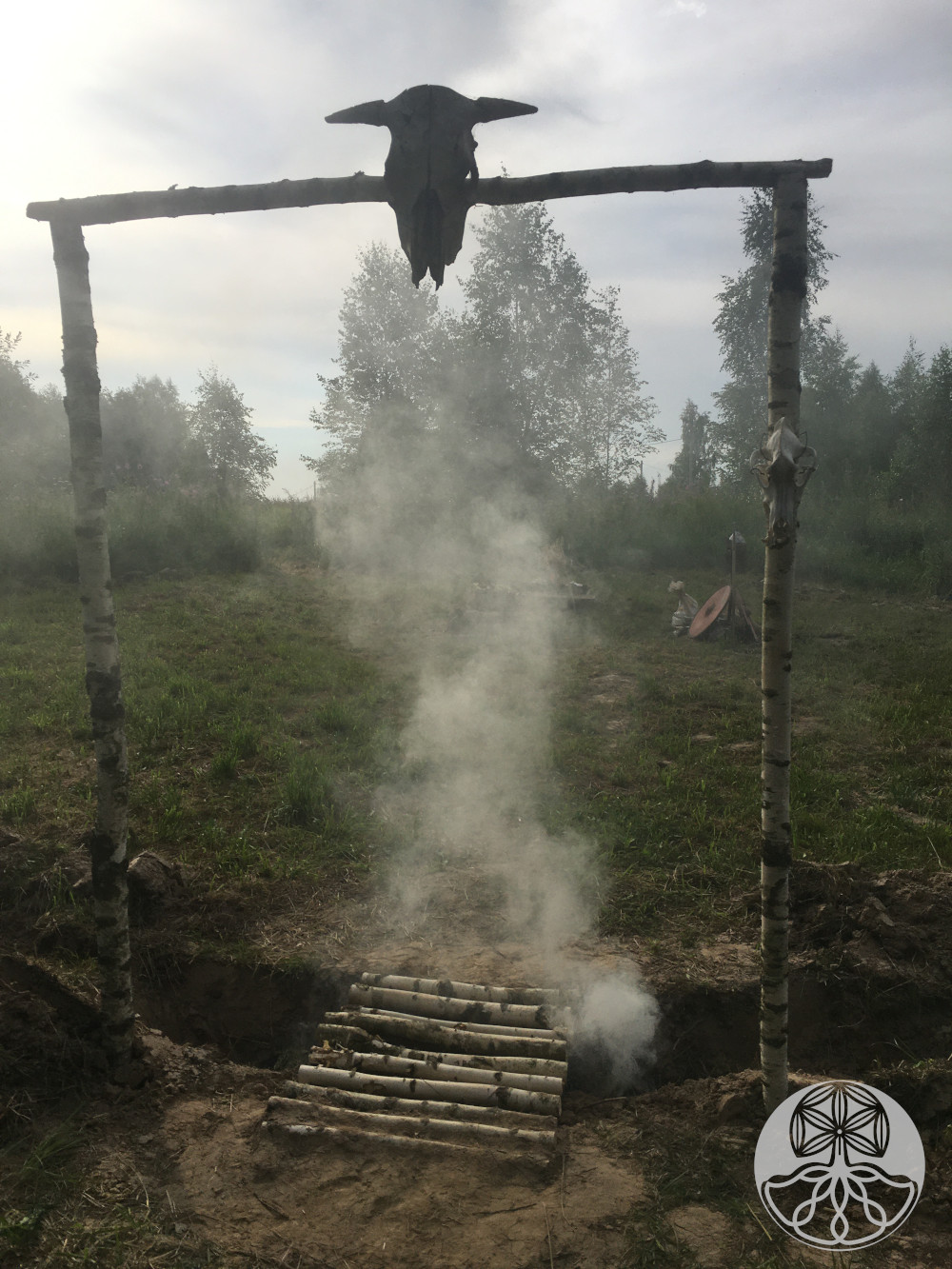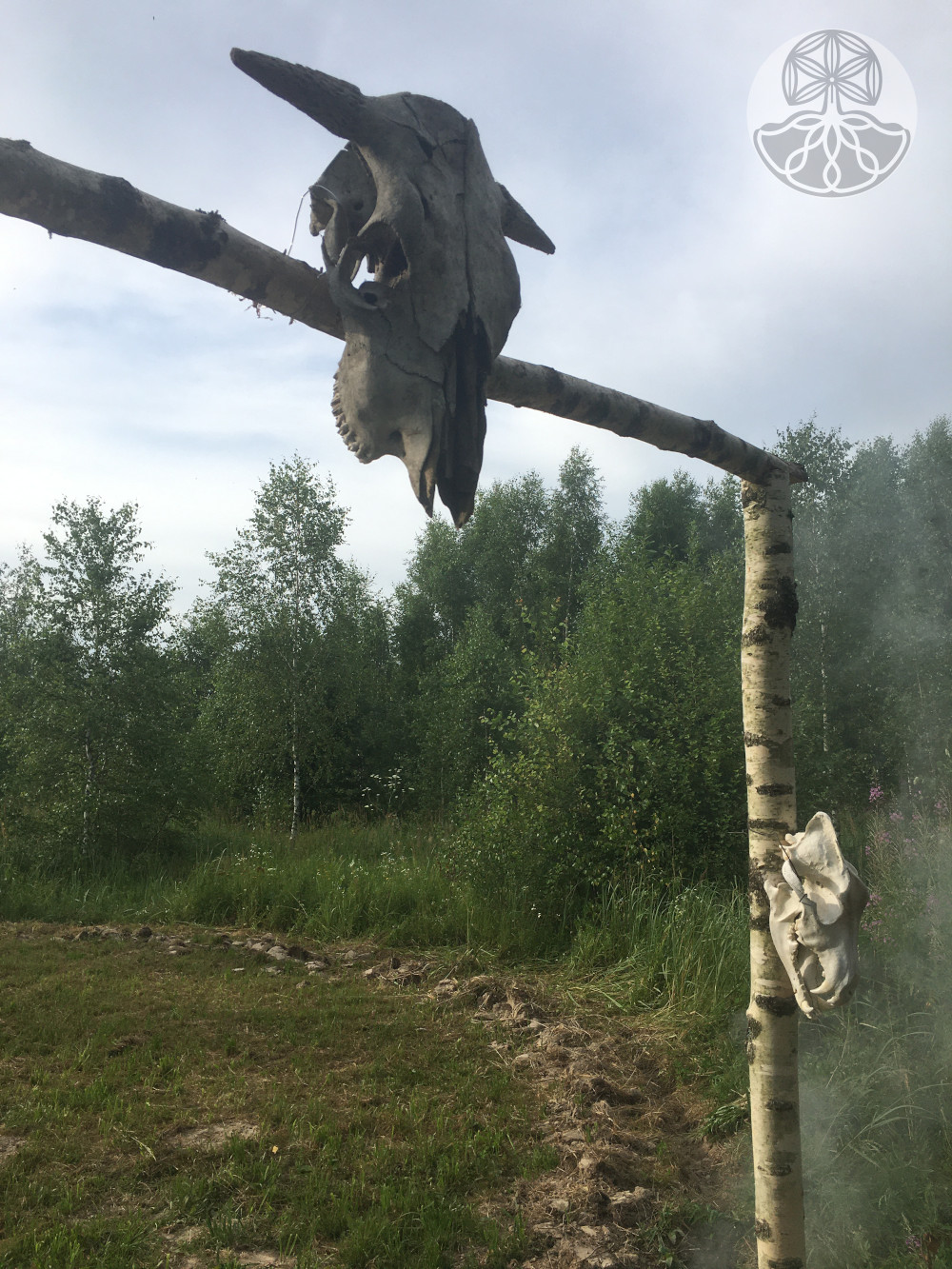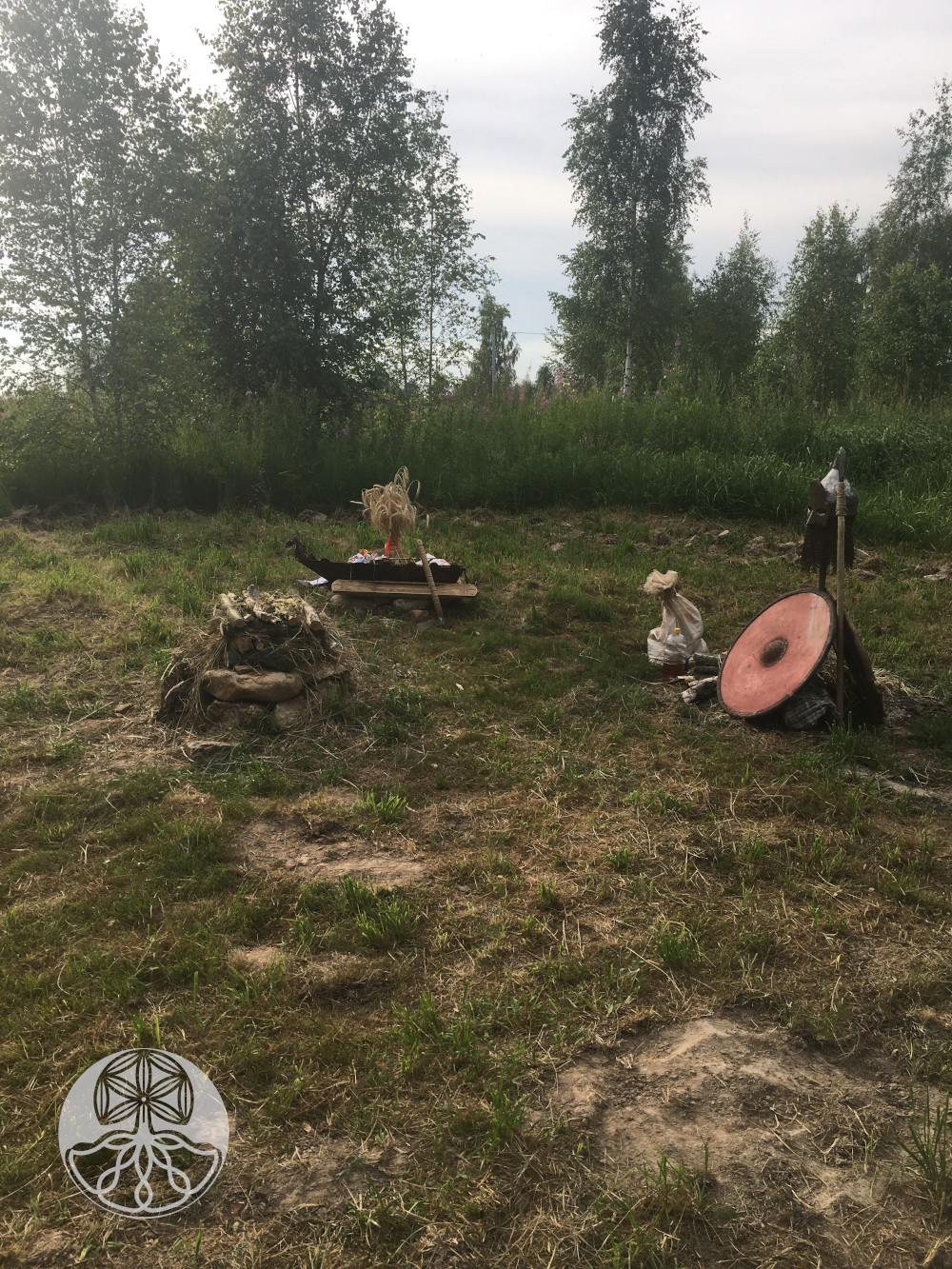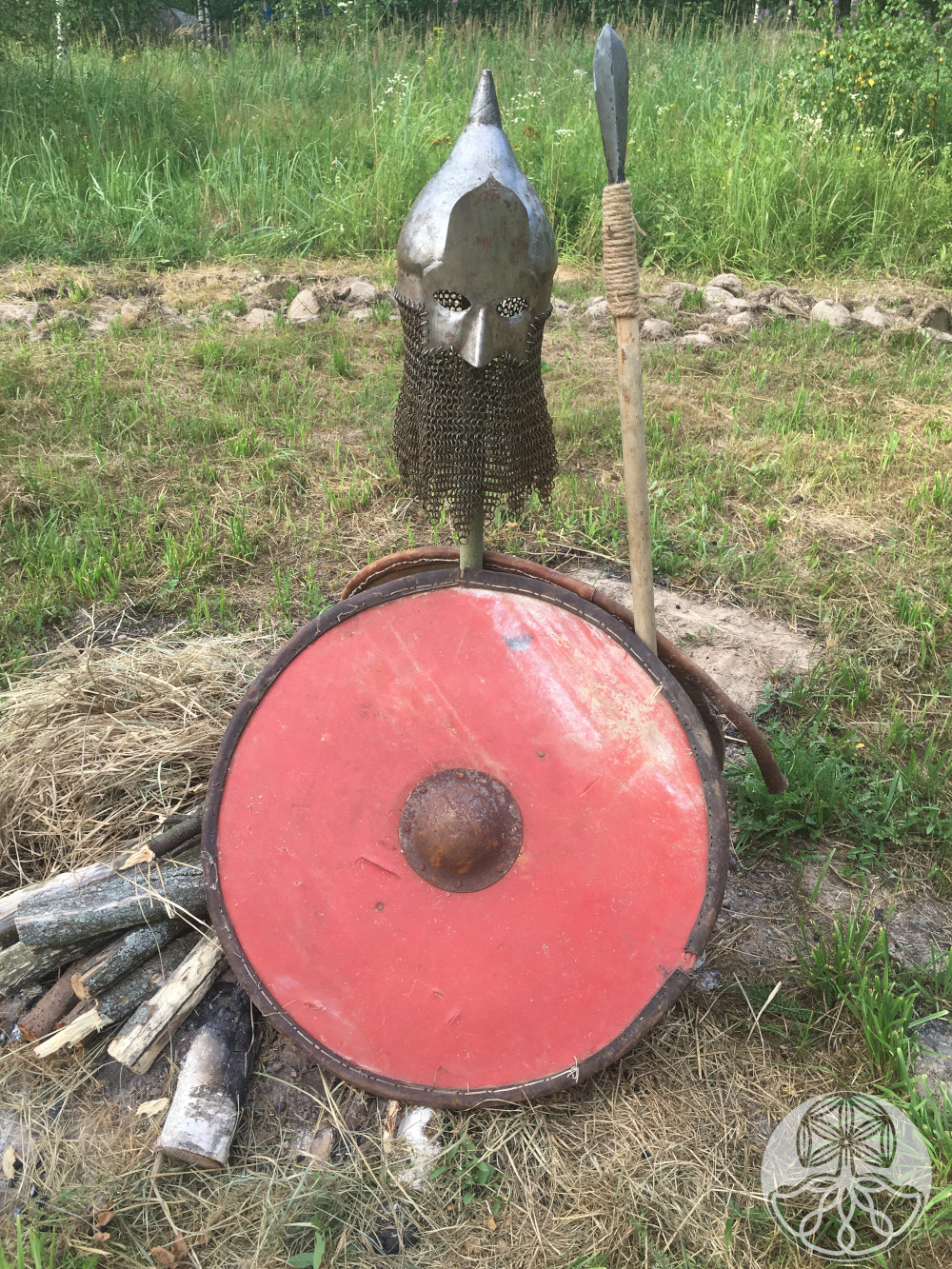

The yard (or courtyard) of the ancient Slavs had mystical properties. Russian peasants, when they handed over livestock to the buyer, made sure that dirt, manure, straw or wood chips from the yard did not stick to the hooves of the animal, and that the buyer did not take anything of the kind with him. Because success in cattle breeding was believed to be carried over from one yard to another in this way.
ꏍ
As the yard adjoins the “outside” world, in Slavic tradition it is considered some sort of a transition space between the “native” and the “alien” worlds. Therefore, it can be dangerous for the household members, especially at certain times of the day and in certain calendar periods and dates. A person outside the walls of the house (as well as in the yard) is in danger from demonic spirits, the souls of the dead, and people with an “evil” eye, who could be just passing by. According to Mazur beliefs, sorcerers and witches could leave or bury various objects in the yard in order to curse the owners. For example, a hair mat (kołtun), which caused diseases and other misfortunes.
ꏍ
Did your ancestors use any special methods to protect the yard?
ꏍ
To be continued…
Artist: Yuri Patsan
ꏍ
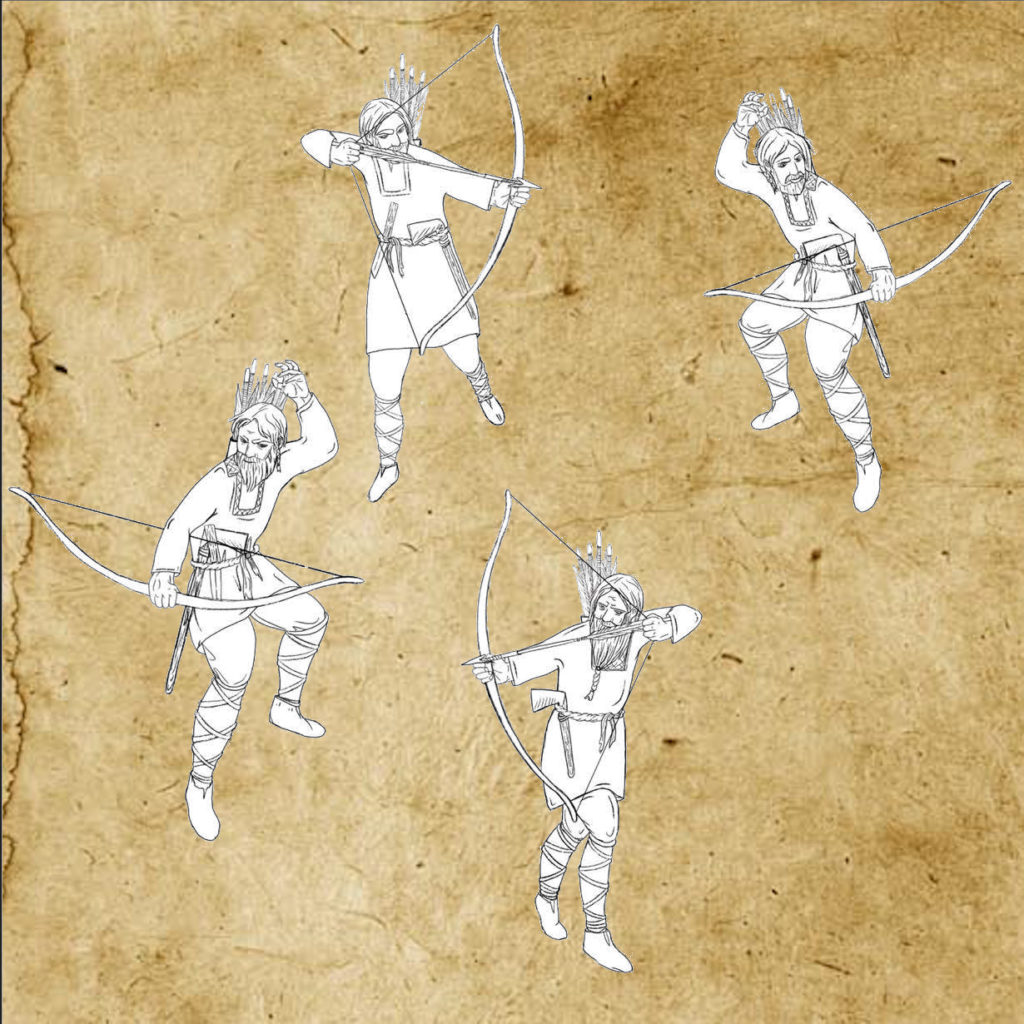
Concept art of the Polanian warriors
Concept art of the Polanian warriors, who came from the North to the Wieprz river valley into the area populated by the Slavic tribe of Lendians…
ꏍ
Our graphic novel about customs and beliefs of the Slavic people in the early Middle Ages is available for download here: https://www.slovene.online/boar (English) and https://slovene.online/isv/komiks-diky-vepr (Medžuslovjansky)
ꏍ
Lapti (bast shoes) and evil spirits
Lapti (bast shoes) and evil spirits.
ꏍ
Bast shoes are often mentioned in connection to mythological creatures. Leshy and Polevik (field spirit) are often portrayed wearing lapti. Weaving bast shoes is a favorite activity of evil characters, and Vodyanoi in particular.
ꏍ
Bast shoes were also used to appease evil spirits. Vologda fishermen and millers threw bast shoes into the water to get help from Vodyanoi. If the cattle were lost, the peasants of the Smolensk region appealed to Rusalki. They went to the forest and brought with them bast shoes, footcloth, bread & salt and left it in a sack on a tree with the words: “Please, Rusalki, accept my gift, and return the cattle!”. In the Kostroma region, when moving to a new house, the owners went to the old yard with one bast shoe and invited Domovoy to go with them in that shoe. In the Vladimir region, people supplied Domovoy with shoes, by hanging old worn “little lapti” in the yard.
ꏍ
The need for shoes for Domovoy is understandable. But what would Rusalki do with them? ?
ꏍ
More interesting facts can be found in: “Slavic Antiquities” – encyclopedic dictionary in 5 volumes by Institute for Slavic Studies of the Russian Academy of Sciences.
ꏍ

Lapti as a talisman
Lapti (bast shoes) were used in magical practice as a talisman. The Russians hung out old bast shoes near the barnyard, in front of the house, or at the gate. This was done in order to protect the house and livestock from the evil eye: anyone who came will first look at the pile of bast shoes and “break his eyes” at them, therefore, will lose the opportunity to inflict damage. These rituals can also be viewed as a sacrifice of shoes to deceased ancestors, who, according to Slavic beliefs, periodically visit their native places and need shoes for their travels.
ꏍ
Leaky bast shoes could serve as the amulet called the “Chicken God” (see our previous posts). Old and leaky bast shoes also served as a talisman in family rituals. To prevent the baby from crying at night, a bast shoe was placed at the head of the crib with the words: “Let the child be silent as this bast shoe”.
ꏍ
Lapti were also used in fertility stimulating rituals. For example, when planting cabbage, old bast shoes were buried at the end of each row so that the cabbage heads were large and dense. And in the Vologda region, a calving cow was fumigated from the owner’s right bast shoe.
ꏍ
What do you think they did with the remaining bast shoe from the owner’s left foot? ?
ꏍ
To be continued…
ꏍ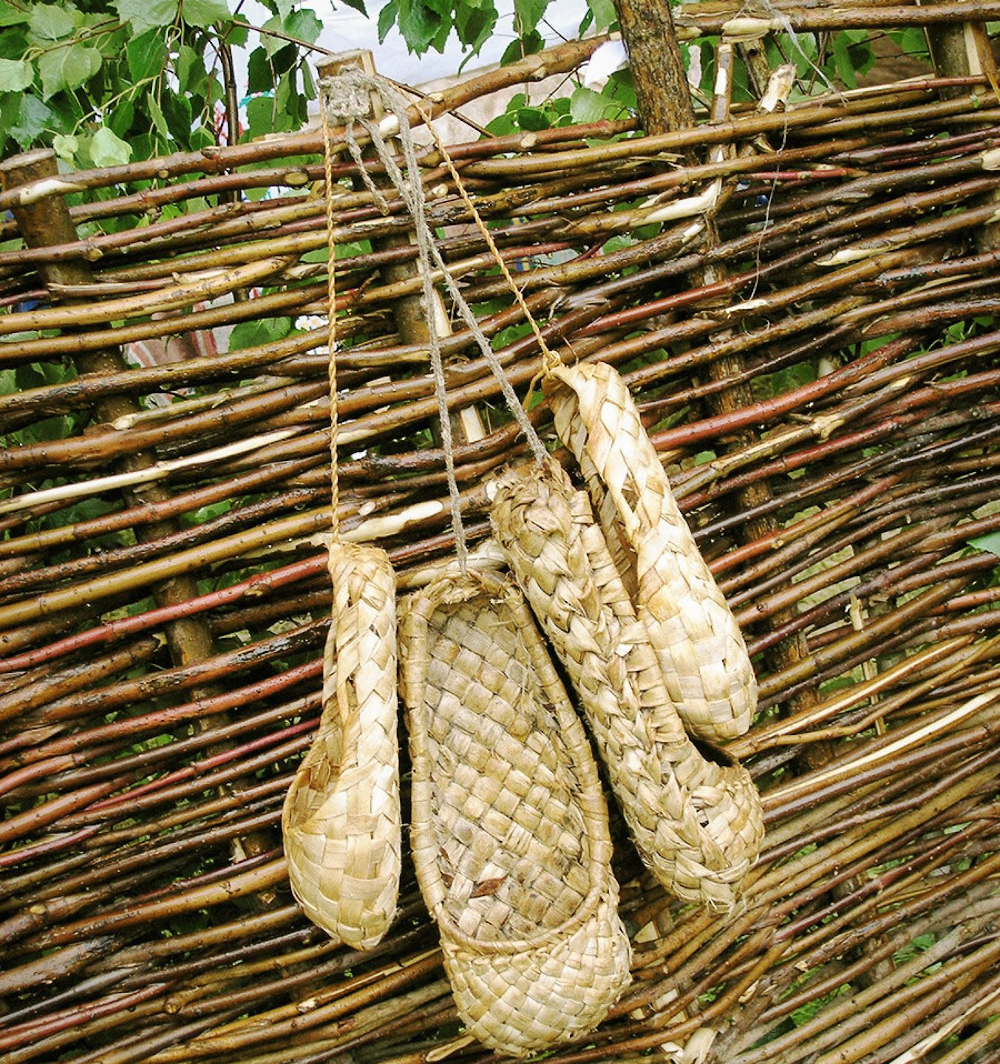
Perun’s Day is a Slavic warriors holiday
Perun’s Day is a Slavic warriors holiday celebrated on the 20th of July. After praising Perun, the warriors begin to sanctify their weapons: swords, axes, knives and other weapons are placed on the shields at the shrine. Warriors’ amulets are sanctified over the sacrificial fire.
ꏍ
Eight days prior, lots are drawn (“cherty”, to determine the sacrifice, and “rezy”, to determine its quantity). A bull, a rooster, money or food can be chosen as a sacrifice. The lot can also be drawn for warriors to engage in a duel. The fighters agree among themselves on the choice of weapons or wrestling.
ꏍ
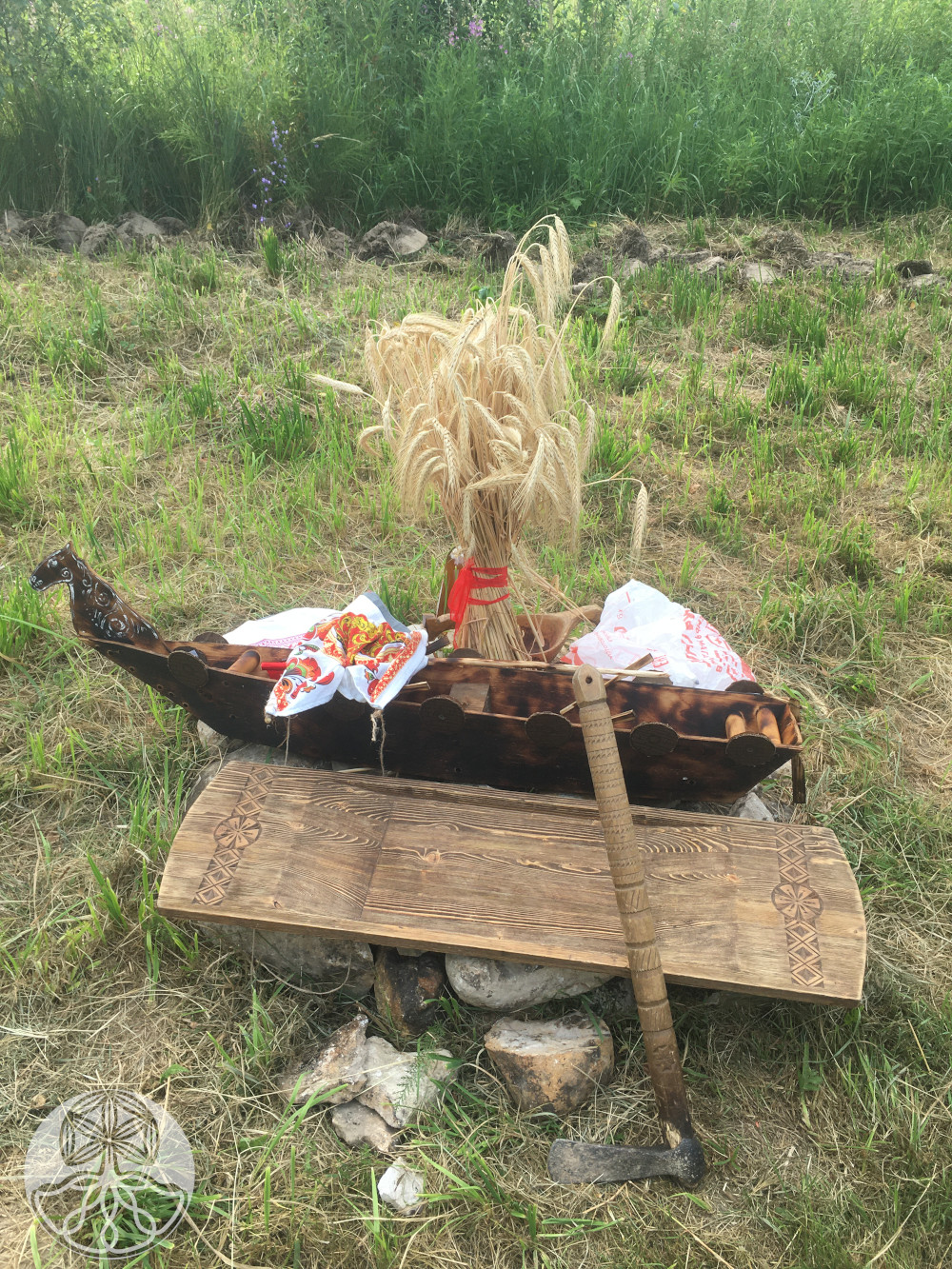
Then a ritual battle begins, dedicated to the victory of Perun over Veles (Perun defeats Veles and returns the herd of heavenly cows). At the end of the battle, the warriors carry a boat with gifts and put it on “krada” (ritual fire).
ꏍ
On this day, ceremonial initiations into warriors are held, as well as a rite at which all fallen Slavic warriors are commemorated. Ritual food: beef, game meat, chicken, porridge. Drinks: honey, red wine, beer, kvass.
ꏍ
Based on materials from the book by V. S. Kazakov “The World of Slavic Gods”, 7th edition.
ꏍ